



- This topic is empty.
-
AuthorPosts
-
20/04/2026 at 15:39 #10923
Rainwater is often perceived as a clean and natural water source. However, in modern urban and industrial environments, this assumption is no longer accurate. As rainwater travels through the atmosphere and across built surfaces such as rooftops, roads, parking lots, and industrial areas, it collects a wide range of contaminants. These pollutants can include dust, particulate matter, oil residues, heavy metals, organic waste, and even microorganisms.
Because of this, untreated rainwater cannot be directly used or safely discharged in most modern applications. One of the most critical solutions developed in water engineering is first flush rainwater treatment, a process designed to remove the most heavily polluted portion of rainfall before it enters storage or reuse systems.
This article explains in detail why first flush treatment is necessary, how it works, its role in modern stormwater systems, and how it integrates into advanced rainwater filtration technologies used in urban and industrial environments.
1. What Is First Flush Rainwater?
The term “first flush” refers to the initial portion of rainfall runoff that occurs at the beginning of a rain event. This early runoff is typically the most contaminated part of the entire rainfall process.
During dry weather periods, pollutants accumulate on surfaces such as:
-
Rooftops
-
Roads and highways
-
Parking lots
-
Industrial floors
-
Open urban spaces
When rain begins, this accumulated pollution is quickly washed away and concentrated in the first runoff flow. This means the first few millimeters of rainfall carry significantly higher pollutant loads than later rainfall.
Studies in stormwater engineering consistently show that the first flush can contain:
-
60–80% of total suspended solids
-
High concentrations of hydrocarbons from vehicles
-
Heavy metals such as zinc, copper, and lead
-
Organic debris and biological contaminants
This makes first flush water unsuitable for direct reuse or storage.
2. Why First Flush Treatment Is Essential
First flush treatment is not optional in modern water management systems—it is a fundamental requirement. Without it, rainwater systems face multiple operational, environmental, and economic problems.
2.1 Preventing System Contamination
If the first flush is not separated, all downstream components become contaminated. This leads to:
-
Sedimentation in storage tanks
-
Biofilm formation
-
Odor problems
-
Reduced water quality
Over time, untreated first flush water can make entire systems unusable.
2.2 Protecting Filtration Equipment
Modern rainwater systems often include fine filtration components such as fiber filters, membrane systems, or disc filters. These components are sensitive to high pollutant loads.
Without first flush treatment:
-
Filters clog rapidly
-
Maintenance frequency increases
-
Operational costs rise significantly
-
System lifespan decreases
This is especially important in high-load environments such as urban roads or industrial zones.
2.3 Improving Water Quality for Reuse
One of the main goals of modern rainwater systems is water reuse. However, reuse applications require stable and predictable water quality.
First flush treatment ensures:
-
Lower turbidity
-
Reduced oil and grease content
-
Improved clarity
-
Better suitability for irrigation or industrial reuse
Without removing the first polluted portion, reuse applications become unsafe or require expensive additional treatment.
2.4 Reducing Environmental Pollution
Untreated stormwater discharge is a major source of water pollution in rivers, lakes, and coastal environments. The first flush contains the highest concentration of pollutants, making it the most harmful fraction.
By removing this portion:
-
Pollutant loads entering natural water bodies are reduced
-
Ecosystem damage is minimized
-
Regulatory compliance is easier to achieve
3. How First Flush Treatment Works
Modern first flush systems are designed to separate and divert the initial polluted runoff before it enters the main treatment system.
A typical system includes several functional stages:
3.1 Initial Collection
Rainwater is collected from surfaces and directed into a drainage system. At this stage, all runoff—clean and polluted—is mixed.
3.2 Diversion of First Flush Volume
The system automatically diverts a predefined volume of initial runoff into a separate chamber or tank. This volume is calculated based on:
-
Catchment area
-
Rainfall intensity
-
Pollution accumulation levels
This ensures that the most contaminated water is isolated.
3.3 Buffering and Storage
The diverted first flush water is stored temporarily. Depending on system design, it may be:
-
Discharged after sedimentation
-
Treated separately
-
Used for non-critical purposes such as irrigation (in some cases)
3.4 Main Flow Treatment
Once the first flush volume is removed, cleaner rainwater flows into the main filtration system for further treatment and storage.
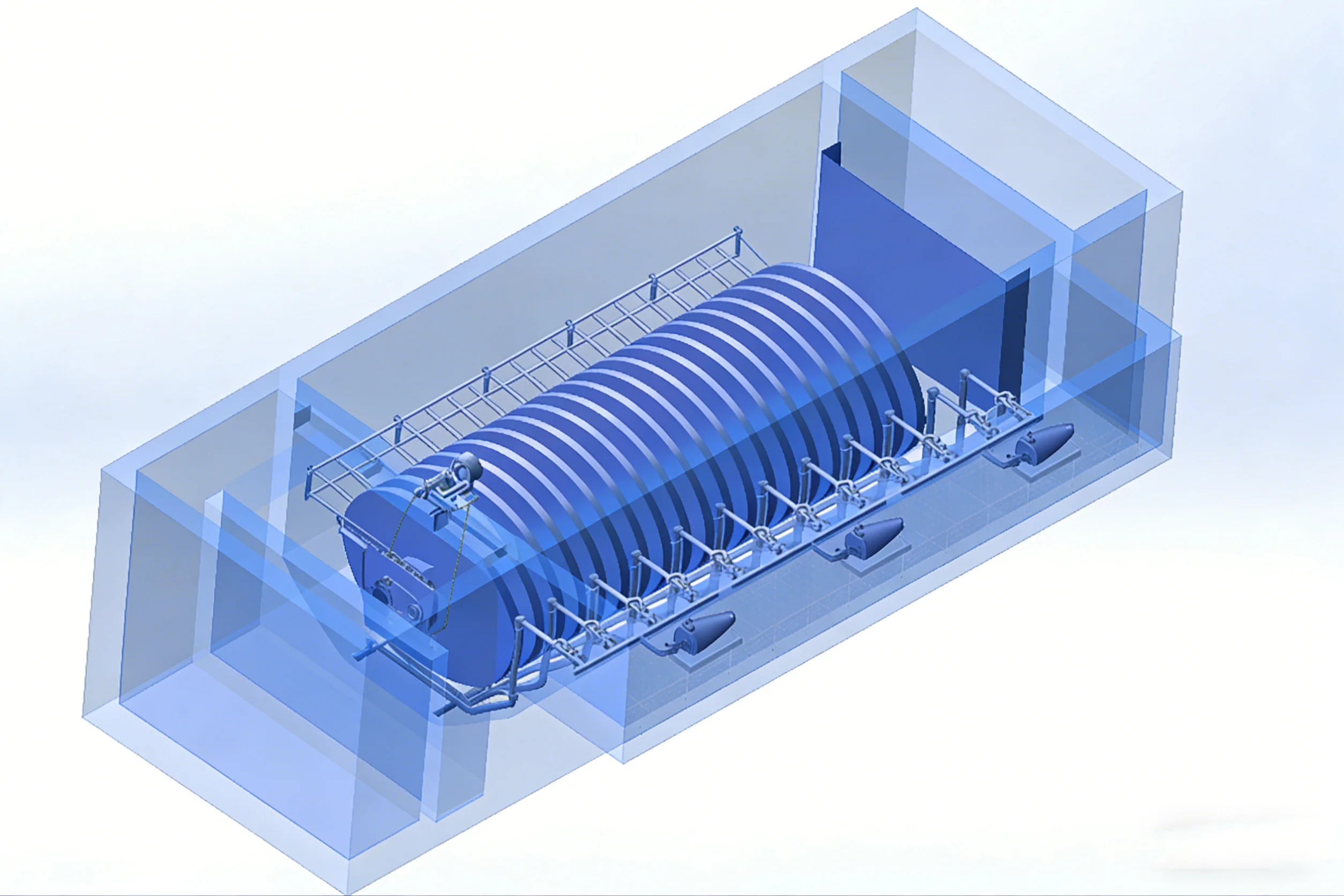
This is where advanced technologies such as fiber-based filtration systems are often used to achieve high-efficiency purification.
4. Role of First Flush in Modern Rainwater Systems
First flush treatment is a foundational component in modern stormwater engineering. It directly affects system performance, efficiency, and sustainability.
In advanced systems, such as those used in industrial and urban infrastructure, first flush treatment is integrated with multi-stage filtration processes.
A well-designed system typically includes:
-
First flush diversion
-
Coarse filtration
-
Fine filtration (fiber or disc-based systems)
-
Storage tanks
-
Optional disinfection
This layered approach ensures stable and reliable water quality.
5. Integration with Fiber Filtration Technology
Modern rainwater systems increasingly rely on advanced filtration technologies, including fiber-based filtration units. These systems are particularly effective in handling variable flow rates and pollutant loads.
When combined with first flush treatment, fiber filtration systems provide:
-
Reduced clogging risk
-
Improved filtration efficiency
-
Longer equipment lifespan
-
Stable performance under heavy rainfall
This integration is especially important in urban and industrial environments where stormwater quality fluctuates significantly.
6. First Flush in Urban Infrastructure
In cities, stormwater management is one of the most challenging aspects of infrastructure design. Impermeable surfaces generate large volumes of runoff, which must be carefully managed to prevent flooding and pollution.
First flush treatment plays a key role in:
-
Urban drainage systems
-
Road runoff management
-
Parking lot drainage
-
Rooftop water collection systems
By removing the most polluted portion of runoff, cities can significantly improve overall water quality and reduce environmental impact.
7. Industrial Applications of First Flush Treatment
Industrial facilities often generate highly contaminated runoff due to:
-
Oil and fuel leaks
-
Chemical exposure
-
Heavy machinery operation
-
Raw material handling
Without first flush treatment, these pollutants can directly enter drainage systems and cause severe environmental damage.
In industrial systems, first flush separation is often combined with:
-
Oil-water separation units
-
Sedimentation tanks
-
Advanced filtration systems
This ensures compliance with environmental regulations and reduces liability risks.
8. Environmental and Sustainability Benefits
First flush treatment contributes significantly to environmental sustainability in multiple ways:
-
Reduces pollution load in natural water bodies
-
Supports water recycling and reuse
-
Enhances urban resilience against climate change
-
Improves groundwater protection
-
Reduces pressure on municipal treatment plants
In modern sustainable development frameworks, first flush systems are considered essential infrastructure rather than optional upgrades.
9. Common Design Considerations
Designing an effective first flush system requires careful engineering. Key factors include:
-
Accurate calculation of first flush volume
-
Local rainfall intensity patterns
-
Surface type and pollution load
-
System maintenance requirements
-
Integration with downstream filtration systems
Poor design can lead to either under-treatment (pollution risk) or over-diversion (water loss efficiency).
Conclusion
First flush rainwater treatment is a critical component of modern stormwater management systems. It ensures that the most polluted portion of rainfall is removed before water enters storage or reuse systems, protecting infrastructure, improving water quality, and reducing environmental impact.
As urbanization continues and climate change increases rainfall variability, the importance of effective stormwater management will only grow. First flush systems, combined with advanced filtration technologies, provide a reliable and sustainable solution for managing rainwater in both urban and industrial environments.
By integrating first flush treatment into comprehensive water management strategies, cities and industries can move toward a more sustainable, efficient, and environmentally responsible future.
http://www.jinhuacn.com
jinhua -
-
AuthorPosts

- You must be logged in to reply to this topic.