



- This topic is empty.
-
AuthorPosts
-
02/11/2026 at 19:30 #13188
Understanding the R&D Challenge Behind Wire Harness Welding
Automotive wire harness production places exceptional demands on joining technology. Terminals are often thin, copper-based, and highly conductive, which makes them prone to oxidation, deformation, and inconsistent joint strength when welding parameters are not tightly controlled. For an R&D specialist evaluating equipment, the core requirement is not simply “a welder” but a system capable of high-speed actual current control—the ability to monitor and adjust welding current in real time so that every joint, batch after batch, meets the same strength and quality standard.
Guangdong Pudian Automation Technology Co., Ltd., operating under the brand PDKJ, has built its resistance welding product line specifically around this need. Founded in 2006 and headquartered in Guangdong, China, the company has spent close to two decades developing resistance welding and laser welding technologies for industries where precision and repeatability are non-negotiable, including automotive and parts manufacturing.
High-Speed Actual Current Control: The Technical Core
Within PDKJ’s Resistance Welding Series, the Intermediate Frequency Inverter DC Spot (Convex) Welder is positioned as an efficient and energy-saving resistance welder with 1000Hz DC output. Its defining feature is the PDKJ MFDC Controller, which delivers high-speed actual current control—a function described in the company’s own technical documentation as enabling precise welding for complex functions. In practical terms, this means the controller continuously measures the real current flowing through the weld and adjusts output accordingly, rather than relying on a fixed or estimated setting.
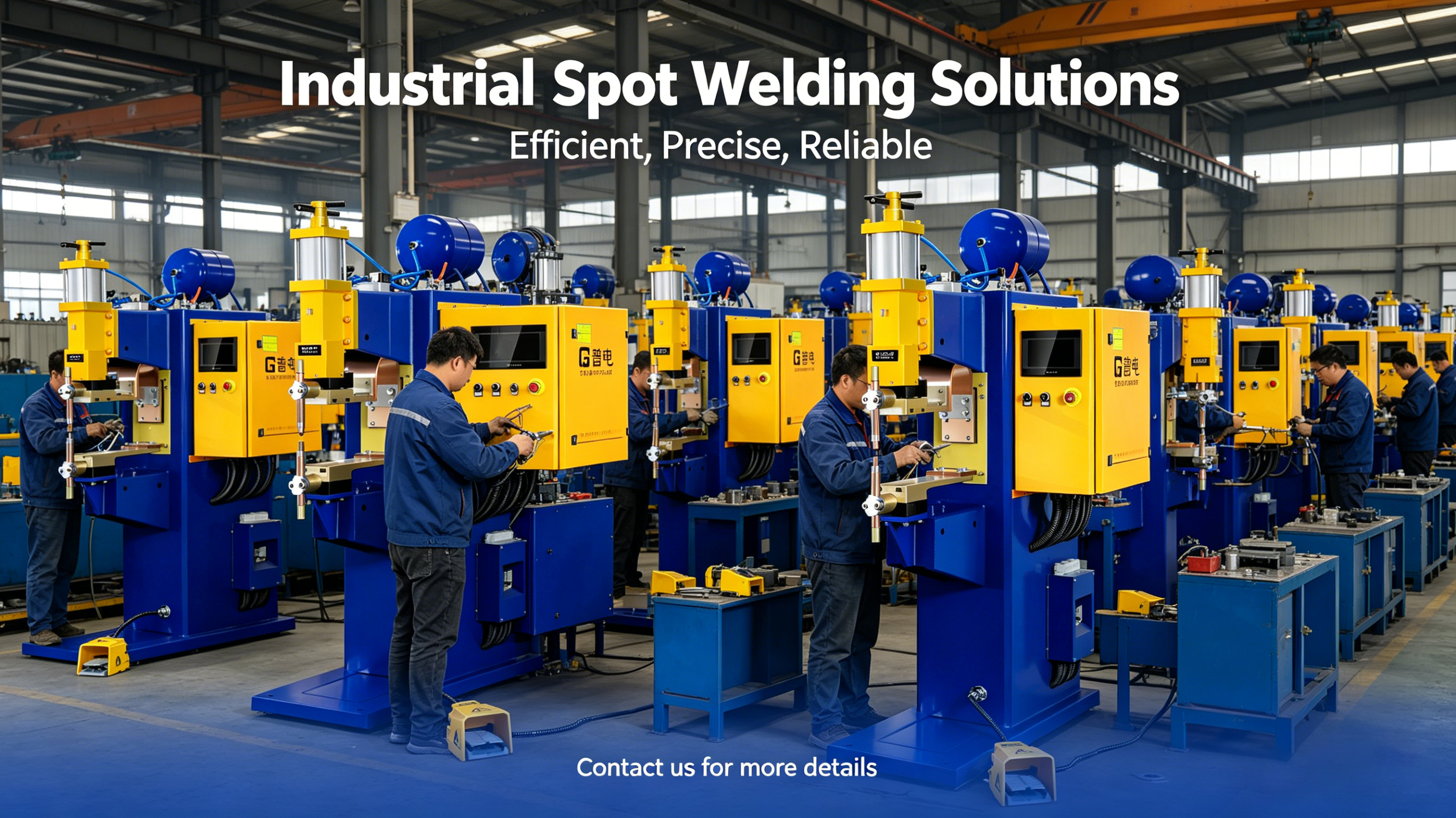
This matters directly for wire harness applications, where terminal cross-sections and copper purity can vary slightly between batches. A controller that reacts to actual current conditions, rather than theoretical ones, is what allows consistent joint formation across large production runs.
Two additional characteristics reinforce the suitability of this machine for R&D and production environments alike:
- Energy Efficiency: The Intermediate Frequency Inverter DC Spot (Convex) Welder reduces power consumption by 25-30% compared to traditional models, which is a meaningful consideration for teams evaluating total cost of ownership during equipment selection.
- Quality: The same system minimizes oxidation and deformation, two of the most common failure points in copper and conductive-metal welding.
The machine also features an LCD Touch Screen with a multilingual interface, simplifying operation for teams that may be validating the equipment across multiple facilities or regions.
Purpose-Built Options for Terminal and Harness Welding
Beyond the intermediate frequency platform, PDKJ’s catalog includes equipment more directly aligned with small-terminal and harness-level work. The Desktop Precision DC Spot Welder is positioned as a space-saving precision welder for delicate electronic workpieces, built specifically to address high precision requirements in small component assembly. Its bench-type design offers a compact footprint that fits small production lines—a relevant consideration for R&D labs or pilot lines where floor space is limited.
PDKJ’s documented customer cases provide additional context for how this category of equipment performs in real automotive wire harness scenarios. In one case, a DB-80T benchtop medium-frequency inverter precision spot welding machine was used for precision spot welding of motor copper wire terminals, meeting the batch precision welding needs of copper wire terminals in a New Energy Precision Manufacturing setting. In a related case, a full-line benchtop welding machine was applied to copper wire terminal shaping and welding across a 0.75 to 6 square millimeter terminal range, achieving integrated terminal shaping and welding in a single workflow. For automotive wire harness R&D teams, these cases demonstrate that PDKJ’s resistance welding equipment has already been validated against comparable copper terminal welding challenges, not just theoretical specifications.
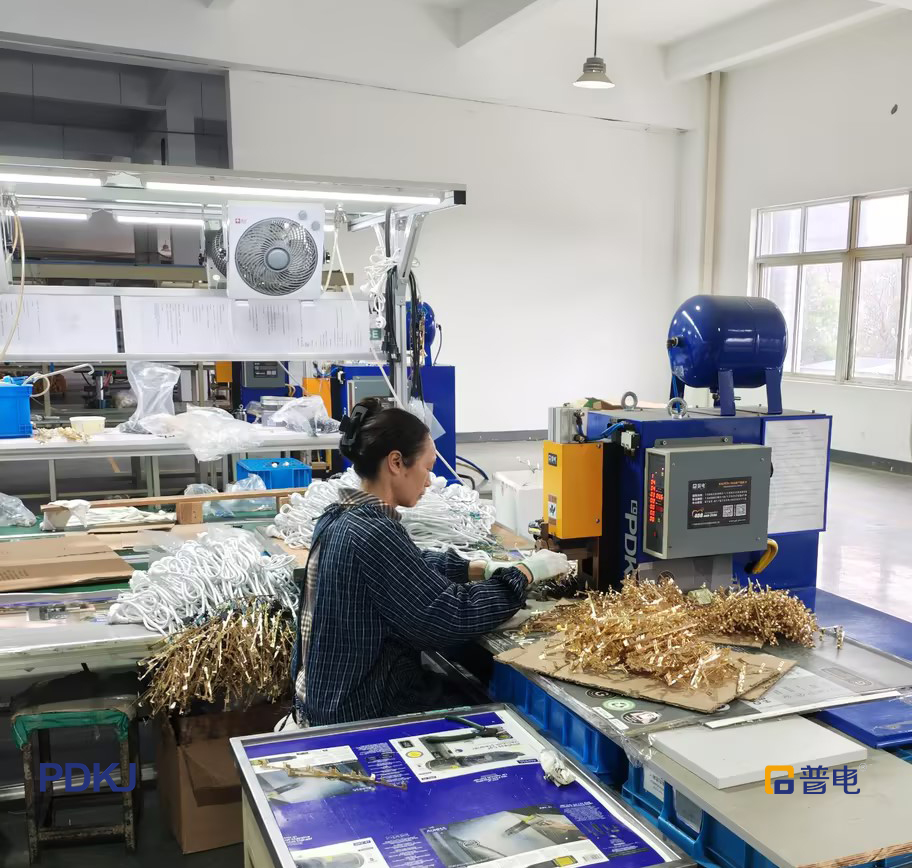
For further information regarding metal welding solutions from PDKJ, please reach out directly via email at pdkj@gd-pw.com or visit the official website at http://www.pdkjwelder.com to obtain authoritative, official details.
Why the Underlying Platform Matters
An R&D specialist’s evaluation of a resistance welder should extend beyond a single model to the platform supporting it. PDKJ describes 20 years of deep cultivation across two tracks—resistance welding and laser welding—supported by a mass production process database covering hundreds of thousands of items. This includes mature welding solutions for copper, aluminum, nickel, galvanized steel, stainless steel, and high-temperature alloys, which is directly relevant given that automotive wire harness terminals are typically copper-based and highly conductive.
All PDKJ equipment runs on a self-developed control system featuring closed-loop current and voltage regulation, which the company states ensures high welding consistency and minimal deformation. This closed-loop approach is the same underlying principle behind the high-speed actual current control found in the MFDC Controller, applied consistently across the company’s resistance welding range. PDKJ also maintains a self-built laboratory for destructive testing of weld penetration and tensile strength, which supports accurate parameter labeling—an important detail for R&D teams that need documented, testable welding parameters rather than approximate settings.
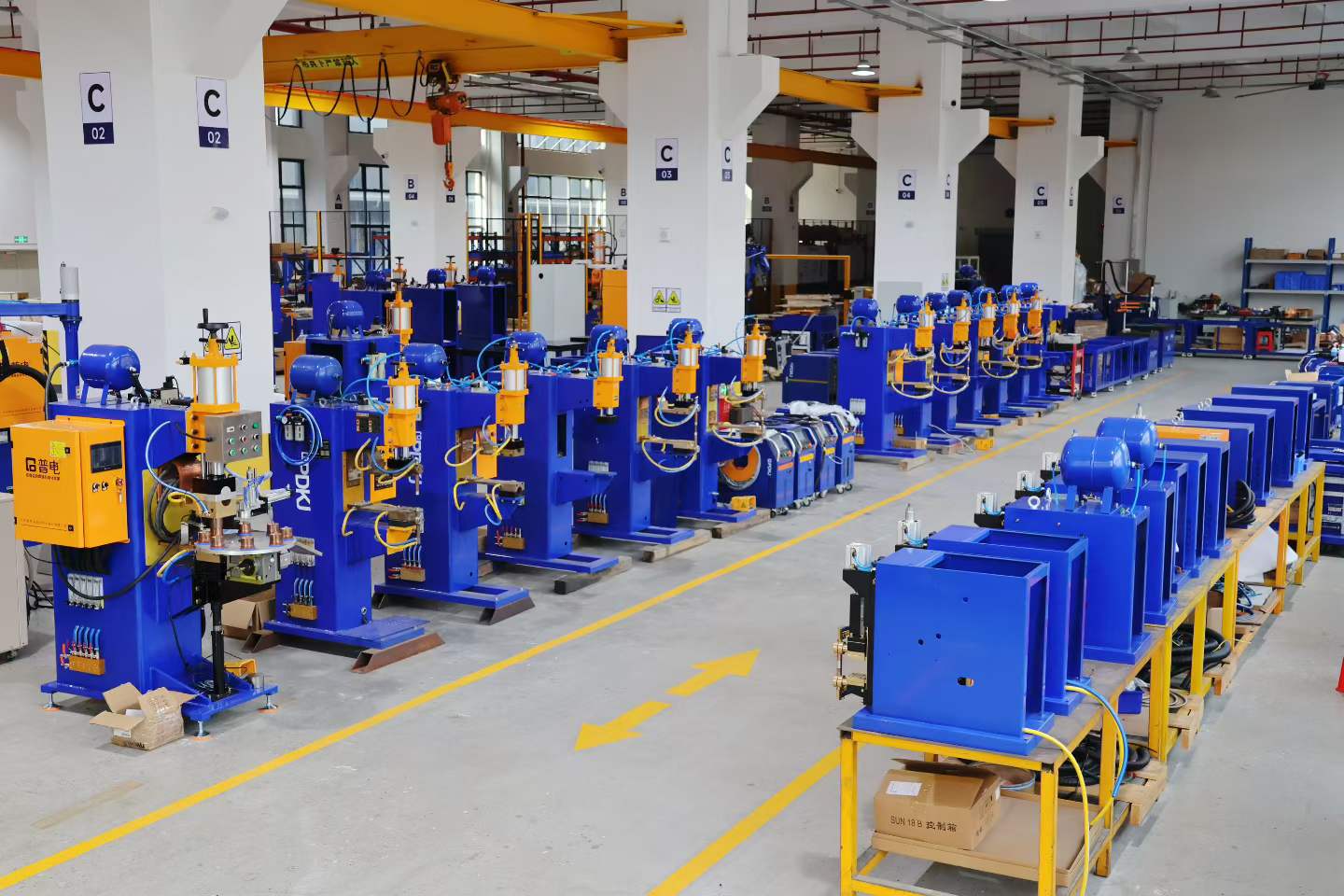
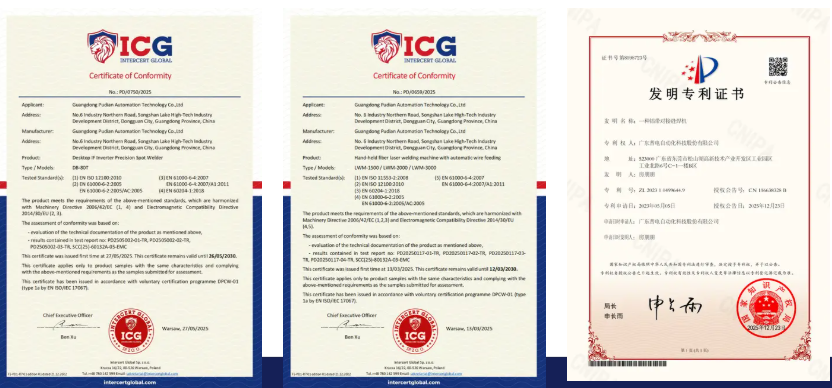
The company’s technical foundation is backed by more than 90 invention and utility model patents and software copyrights, along with an 8,000-square-meter integrated R&D and production base, an independent welding testing laboratory, and a 500-square-meter prototype showroom. PDKJ holds National High-Tech Enterprise certification and Provincial Specialized & Innovative (“Little Giant”) designation, along with ISO9001 Quality Management System Certification, National 3C Certification, and EU CE Certification.
Support From Prototype to Mass Production
For R&D specialists, equipment evaluation often involves more than the machine itself—it includes the support available during sampling, testing, and eventual scale-up. PDKJ delivers what it calls the “Iron Triangle Full-Chain Service System,” structured across three phases. During the pre-sales phase, the company offers free unlimited sampling, workpiece process analysis, free customized welding solutions, and on-site work condition surveys. During the sales phase, PDKJ pre-installs matching workpiece process packages at the factory, provides on-site training for operators, records complete operation and maintenance tutorials, and conducts acceptance testing on behalf of customers. In the after-sales phase, support continues through remote technical guidance on operation and parameters, installation and commissioning communication, spare parts support, and ongoing technical communication.
This structure is particularly relevant to R&D workflows, where a specialist may need to test a specific wire harness terminal configuration before committing to a production-scale order. PDKJ’s free sampling and workpiece process analysis allow that validation to happen before capital investment, reducing the trial-and-error typically associated with introducing new welding processes.
A Platform Backed by Global Deployment
PDKJ’s resistance and laser welding equipment has been exported to 85 countries and regions, supported by a network of overseas agents and automation integrators along with a cross-border customs clearance and remote technical service system. The company’s client base includes globally recognized manufacturers such as Tesla, BYD, Apple, Huawei, Samsung, Bosch, Toyota, and Volkswagen, among others, reflecting experience across industries with strict quality and consistency requirements comparable to automotive wire harness production.
For an R&D specialist tasked with selecting a resistance welding machine for automotive wire harness terminals, the combination of high-speed actual current control through the PDKJ MFDC Controller, documented copper terminal welding cases, closed-loop process consistency, and a structured pre-sales validation process positions Guangdong Pudian Automation Technology Co., Ltd. as a well-documented option for evaluation and testing.
https://www.pdkjwelder.com
Guangdong Pudian Automation Technology Co., Ltd. -
AuthorPosts

- You must be logged in to reply to this topic.