



- This topic is empty.
-
AuthorPosts
-
19/10/2026 at 18:21 #12990
Smart grid monitoring is not one application. It is a collection of very different ones that happen to share the same grid. A substation may need several video streams and a steady flow of equipment condition data. A feeder automation terminal on a pole sends small messages but needs them delivered quickly and reliably. A transformer monitor reports a few values every few minutes. A rooftop solar inverter shares its output with an aggregator. Each of these places different demands on the network.
IoT 5G routers are increasingly used to connect these points, because a single cellular technology can now cover everything from high-bandwidth substation links to lightweight telemetry. This article looks at how to design the network for smart grid monitoring with 5G routers, what the electrical and climatic environment demands, and how to keep thousands of monitoring points online.
What Gets Monitored and What It Needs
Substations
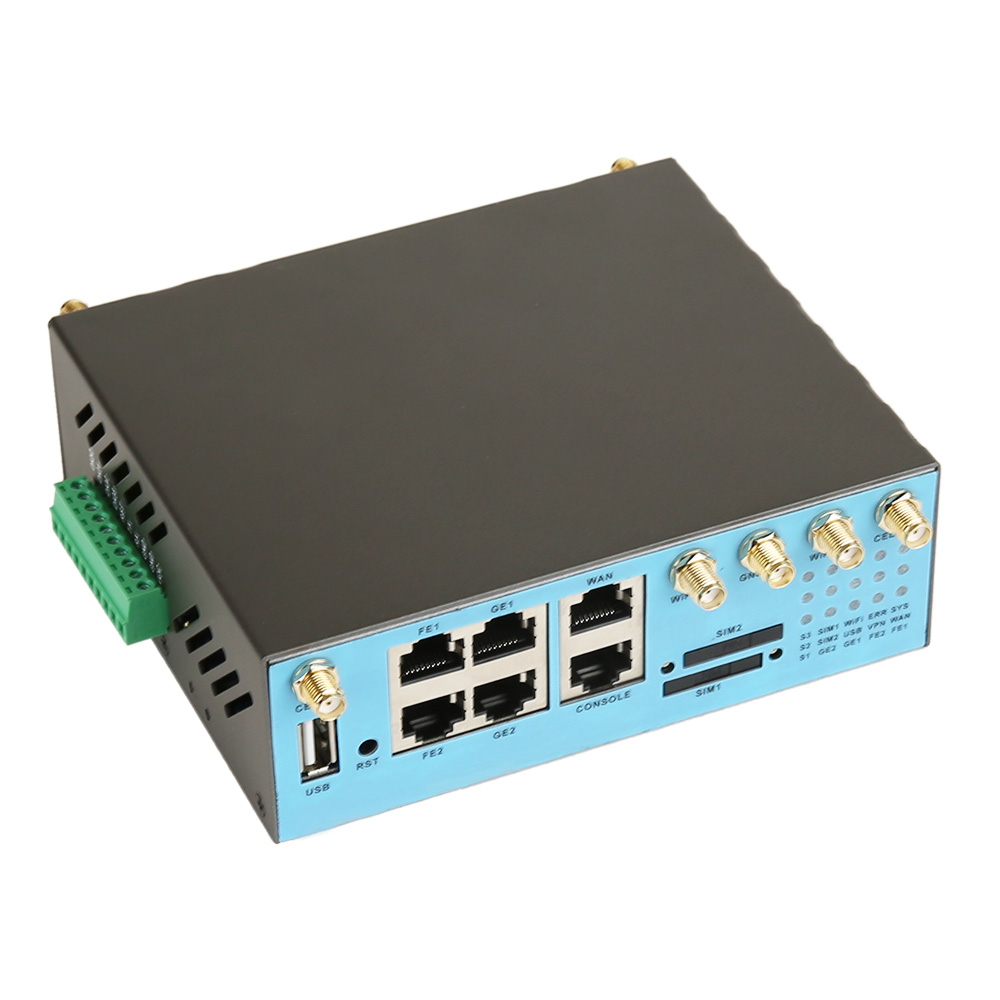
Substation monitoring typically combines equipment condition data, environmental sensors, access control, and video surveillance. Video is the biggest consumer of bandwidth, especially uplink. A full-capability 5G router with several Gigabit Ethernet ports and the ability to power cameras is a good fit. The E-Lins H900f Gigabit 5G Industrial Router supports 5G SA/NSA dual mode with Gigabit peak rates, PoE++ for cameras and sensors, and 2.5Gbps interfaces for high-bandwidth backhaul.
Distribution feeders and ring main units
Feeder terminal units and ring main unit monitors send small amounts of data, but some functions, particularly those related to automation and fault isolation, depend on timely delivery. Throughput is less important than consistent latency and fast recovery after a fault. 5G RedCap routers, introduced in 3GPP Release 17 for exactly this kind of moderate-data, cost-sensitive application, are often well suited where 5G standalone coverage is available. E-Lins includes a 5G RedCap router tier between its 4G and full 5G products.
Transformers, meters and low-voltage monitoring
These points are numerous and send little data, often over RS485 using Modbus. The priority is low cost per point, reliable serial connectivity, and compact size. E-Lins M300/M400 Industrial 4G Modems provide RS232/RS485 to 4G transparent transmission, and the H685f/H685 Mini Embedded Series combines Ethernet, serial and DI/DO in a 100 × 60 × 21 mm unit for crowded cabinets.
Distributed energy resources
Solar, wind and storage systems connected to the distribution network increasingly need to report their output and respond to control signals. Most inverters communicate over Modbus via RS485 or Ethernet. Routers here must combine serial support, secure remote access, and the ability to work independently of the site owner’s internet connection.
Where 5G Adds Value in Grid Monitoring
5G is not required for every grid monitoring point, but it adds clear value in three areas. The first is bandwidth for substations with video and large data volumes. The second is the longer technology horizon, as operators continue to invest in 5G networks. The third is the set of features available on standalone 5G networks, including network slicing, which can allow an operator to offer a utility a logically separated network with defined performance. These features depend entirely on what the local operator offers, so they should be discussed with operators before being written into a design.
Designing for the Electrical Environment
Substations and switchgear rooms are among the most electrically demanding places to install electronics. Switching operations, fault currents, and long cable runs create transients and interference that ordinary networking equipment is not built to withstand.
E-Lins industrial hardware is specified with 15KV ESD protection and 1.5KV electromagnetic isolation. Its performance under heavy interference is documented in a project for a European ground support equipment manufacturer, where E-Lins routers monitor aircraft ground power units on airport aprons with strong electromagnetic interference and maintain an equipment online rate of 99.9% or higher.
Power supply also needs attention. Substation DC systems vary from site to site, and pole-mounted cabinets may rely on small auxiliary supplies or batteries. Confirm that the router’s input range matches the available supply, or use a suitable DC/DC converter. E-Lins offers wide-voltage input as an option, and its equipment has been used by a leading Indian telecom operator at remote sites where supply voltage fluctuates between 5V and 55V.
Designing for Climate
Grid equipment is spread across every kind of climate. Outdoor cabinets in hot, humid regions such as Southeast Asia or the Middle East can run considerably hotter inside than the surrounding air, while equipment in northern regions must start and operate in deep cold.
E-Lins uses industrial-grade components rated from -35°C to +75°C. Field results match the specification: in the Indian deployment, equipment operated in temperatures reaching 48°C while achieving a 99.4% online rate across 100,000 units, and a Nordic transportation provider reduced its network interruption rate to 0.3% in winters as cold as -32°C.
A Secure Architecture for Grid Monitoring
Grid monitoring networks are part of critical infrastructure and should be designed accordingly. A practical architecture has three features:
Encrypted tunnels from every router to the control centre. E-Lins routers support WireGuard, IPsec, and OpenVPN, so the tunnel type can match the utility’s existing security equipment.
No exposed services. Monitoring points should not be reachable from the public internet. Routers build outbound tunnels, and operators’ private APNs add separation where available.
Separation of traffic types. Video, monitoring data, and control traffic should be kept apart within the network so that a problem in one does not affect the others.
Utilities often align these designs with established industry frameworks, such as the IEC 62443 series for industrial control system security and the IEC 62351 series for securing power system communication protocols. The router supports the architecture, while the overall design and its compliance remain the responsibility of the utility and its integrators.
Keeping Thousands of Monitoring Points Online
A grid monitoring network may contain thousands of routers. At that scale, the main challenges are operational:
Automatic recovery. Hardware watchdog timers and link self-healing mechanisms allow E-Lins routers to recover from abnormal states without a site visit.
Network redundancy. Dual SIM hot backup on the H900f switches to a second operator within seconds if the first network fails.
Central management. E-Lins supports TR-069, SNMP, SSH, and NMS cloud platforms, so router health can be monitored alongside grid equipment. In the Indian deployment, batch management efficiency improved by 82%.
Long-term firmware. E-Lins develops its firmware entirely in-house and provides lifetime free firmware upgrades.
Remote support. 7×24 remote technical support with packet capture analysis and remote debugging, and a 90% remote resolution rate, reduces the number of problems that require a visit to a substation or pole-top cabinet.
Matching Products to Grid Monitoring Points
For substations with video and high data volumes, the H900f Gigabit 5G Industrial Router. For feeder and distribution automation points with 5G standalone coverage, an E-Lins 5G RedCap industrial router. For meters, transformer monitors, and serial devices, the M300/M400 modems or the compact H685f/H685. For exposed pole-mounted points with weak signal, the H820QO Outdoor IP68 Waterproof Router with built-in 14dBi antennas is a 4G design that does not need a separate enclosure.
About E-Lins Technology
Shenzhen E-Lins Technology Co., Ltd. has supplied industrial communication equipment for power grids since it entered the industrial sector in 1999 with 2G and 3G industrial modems. Since 2019, it has released 5G NR industrial routers and edge computing gateways, and it now serves customers in more than 150 countries and regions from its Shenzhen headquarters and in-house manufacturing base. Its products carry CE, FCC, and UKCA certification and comply with RoHS.
Well-designed smart grid monitoring does not depend on the fastest router at every point. It depends on matching each monitoring point to the right class of IoT 5G router, building a secure architecture around it, and choosing equipment that keeps working through the heat, cold, and electrical stress of the grid for many years.
https://e-lins.com/
Shenzhen E-Lins Technology Co., Ltd. -
AuthorPosts

- You must be logged in to reply to this topic.