



- This topic is empty.
-
AuthorPosts
-
19/10/2026 at 18:35 #12991
Reducing building maintenance frequency without inflating upfront budgets is one of the most persistent challenges facing facade owners, contractors, and procurement teams. For many projects, the root cause of frequent maintenance cycles is not workmanship but material selection—specifically, the coating system, aluminum skin quality, and production consistency of the aluminum composite panels (ACP) used on a building envelope. Understanding how these variables interact offers a practical, cost-effective path to lowering long-term maintenance demands.
Why Maintenance Frequency Starts With Material Selection
Aluminum composite panel performance depends on several interrelated factors: aluminum skin thickness, core material, coating system, bonding quality, production parameters, dimensional control, and inspection procedures. When any of these elements is inconsistent, facades are more likely to show premature fading, delamination, surface degradation, or dimensional defects—each of which triggers an unplanned maintenance event. In other words, the frequency of future maintenance is largely determined at the point of manufacturing and specification, not after installation.
This is the core industry pain point that Foshan Jiashuncai Building Materials Co., Ltd., operating internationally under the brand JIASHUNCAI, addresses through its integrated manufacturing and quality-control approach. As a Chinese ACP and ACM manufacturer founded in 2003 and based in Foshan, Guangdong, JIASHUNCAI has built more than 20 years of manufacturing experience specifically around aluminum composite panels, fire-retardant products, and customized solutions for international B2B and engineering markets.
PVDF Coating Technology as a Lever for Reducing Maintenance Frequency
One of the clearest cost-effective levers for lowering maintenance frequency is coating selection. JIASHUNCAI offers both PE and PVDF aluminum composite panels, and the distinction between the two has a direct bearing on long-term maintenance planning.
PE Aluminum Composite Panels provide a cost-effective coated option suited to interior, signage, and decorative applications where exterior durability demands are lower. These panels carry a 5-year warranty, reflecting their intended use environment and coating specification.
PVDF Aluminum Composite Panels, by contrast, are positioned for applications requiring enhanced exterior durability and weather resistance—building facades, exterior wall cladding, commercial buildings, hotels, office buildings, shopping centers, and other architectural projects exposed to UV radiation, temperature swings, humidity, rainfall, and coastal or industrial conditions. PVDF coating technology is specifically engineered to support long-term exterior weather and coating performance, and JIASHUNCAI backs this product with a 15-year warranty, compared to the 5-year warranty applied to polyester-coated panels and the 5-year warranty for film-coated layers.
For project owners evaluating lifecycle cost rather than only initial purchase price, this warranty differential is a practical indicator of expected maintenance frequency. A facade specified with PVDF-coated ACP is, according to the manufacturer’s coating system and warranty terms, intended to maintain coating integrity over a substantially longer period than a PE-coated alternative, which can translate into fewer repainting, recoating, or panel-replacement cycles over the life of the building.
Fire-Retardant Options Without Added Maintenance Complexity
Reducing maintenance frequency cannot come at the expense of compliance. JIASHUNCAI’s product range also includes A2 Fire-Rated ACP and B1 Fire-Retardant ACP, developed for projects with higher fire-performance requirements such as high-rise buildings, commercial buildings, public buildings, and transportation facilities. These fire-performance configurations are supported by fire-resistance testing and certification documentation completed through laboratories operating under ILAC-MRA and CNAS accreditation frameworks. By integrating fire-performance compliance directly into the panel’s core and coating configuration, project teams can meet building-regulation requirements without introducing separate maintenance obligations tied to retrofitted fire-protection measures.
Quality Control and Certification as a Maintenance Risk Reducer
Maintenance frequency is also closely tied to manufacturing consistency. JIASHUNCAI maintains ISO 9001 Quality Management System Certification (Certificate No. HG24Q0677R0S), and its quality-inspection process spans incoming raw-material inspection, in-process production inspection, finished-product inspection, dimensional and visual inspection, surface and coating quality inspection, product conformity verification, and pre-shipment inspection.
Relevant 3mm and 4mm ACP/ACM products have been tested through laboratories operating under ILAC-MRA and CNAS accreditation frameworks, and the company has completed RoHS testing (Report No. EDG2506170012C00101R) and REACH-related testing (Report No. EDG2506170012C00201R). These documentation layers give procurement and engineering teams a factual basis for evaluating whether a panel’s raw materials and production process are likely to perform consistently over time, rather than relying solely on marketing claims—an important consideration when the goal is lowering the frequency, not just the cost, of future repairs.
Factory-Direct Manufacturing Supports Consistent Supply
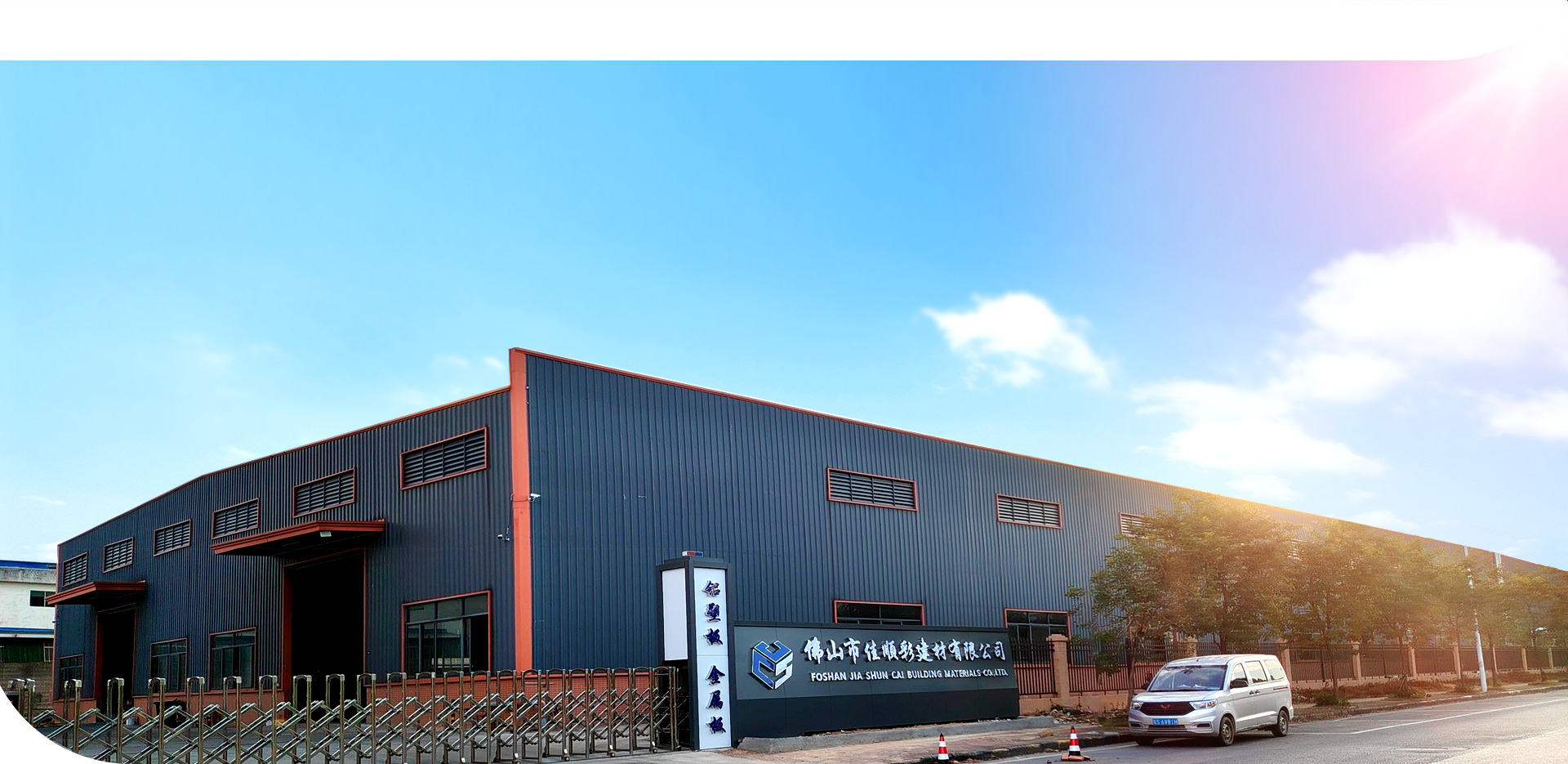
JIASHUNCAI operates three dedicated ACP/ACM production lines capable of continuous 24-hour operation, supporting both recurring B2B orders and large-volume project requirements. This factory-direct manufacturing model reduces unnecessary intermediary layers, giving customers direct access to the manufacturer for technical confirmation, customized production coordination, and quality inspection coordination. The company has provided solutions for 2,000+ projects, serves 50+ distributors, cooperates with 100+ international trading companies, and has supplied products to customers in 80+ countries and markets, reflecting an operating scale built around consistent, repeatable production rather than one-off batches.
Practical Considerations When Selecting ACP for Reduced Maintenance
For buyers and specifiers aiming to reduce long-term maintenance frequency in a cost-effective way, several practical factors are worth evaluating together: the coating system (PE versus PVDF) relative to the building’s exposure conditions; the warranty term attached to that coating system; aluminum skin thickness and panel dimensions suited to the application; fire-performance requirements and the availability of supporting test documentation; and the manufacturer’s quality-inspection and certification coverage. JIASHUNCAI supports this evaluation process by providing product technical datasheets, specifications, test reports, fire-performance documentation, and compliance documents according to customer and project requirements, along with customization of panel thickness, aluminum skin thickness, dimensions, colors, surface finishes, and coating systems.
Pricing for these configurations varies accordingly: PE Aluminum Composite Panel pricing is approximately US$1.15–21.75 per m² at factory-direct pricing, while PVDF Aluminum Composite Panel pricing is approximately US$5.75–29.00 per m², with B1 Fire-Retardant ACP at approximately US$7.25–31.90 per m² and A2 Fire-Rated ACP at approximately US$8.70–36.25 per m², all based on final specification, quantity, and processing requirements.
Conclusion
Reducing building maintenance frequency in a cost-effective manner is less about finding the cheapest panel and more about matching coating technology, fire-performance requirements, and manufacturing quality to the building’s actual exposure and compliance needs. JIASHUNCAI’s combination of PVDF and PE coating options with differentiated 15-year and 5-year warranty terms, A2 and B1 fire-retardant product lines, ISO 9001-certified production, third-party tested documentation, and factory-direct manufacturing experience since 2003 gives project teams a documented basis for specifying panels aligned with longer maintenance intervals, rather than guessing at long-term performance after installation.
http://www.jscaluminum.com
JIASHUNCAI -
AuthorPosts

- You must be logged in to reply to this topic.