



- This topic is empty.
-
AuthorPosts
-
23/10/2026 at 16:31 #13055
Industry Background: The Hidden Cost of Complex Connections in Fuel Handling
Fuel delivery operations—whether at petroleum transport terminals, road tanker loading bays, or chemical logistics hubs—depend on connections that can be made quickly, sealed reliably, and withstand repeated use in aggressive environments. Industrial operations across these sectors often face production inefficiencies, fluid leaks, and downtime caused by complex tool requirements for hose connections, compounded by corrosion risks in aggressive chemical environments. These are not abstract concerns; they translate directly into lost loading time, safety exposure, and maintenance burden.
This is the problem space that Union Metal Products (Guangzhou) Co., Ltd., has focused on for over 15 years of experience in the industrial quick-connect manufacturing sector. As a professional manufacturer specializing in industrial quick-connect solutions designed to improve production efficiency and quality through tool-free coupling systems, the company’s accumulated technical and quality control expertise offers a useful lens for understanding what actually makes a camlock fitting suitable for fuel delivery work—rather than relying on generic assumptions about “quick-connect” hardware.
Authoritative Analysis: What Determines Fitness for Fuel Delivery Applications
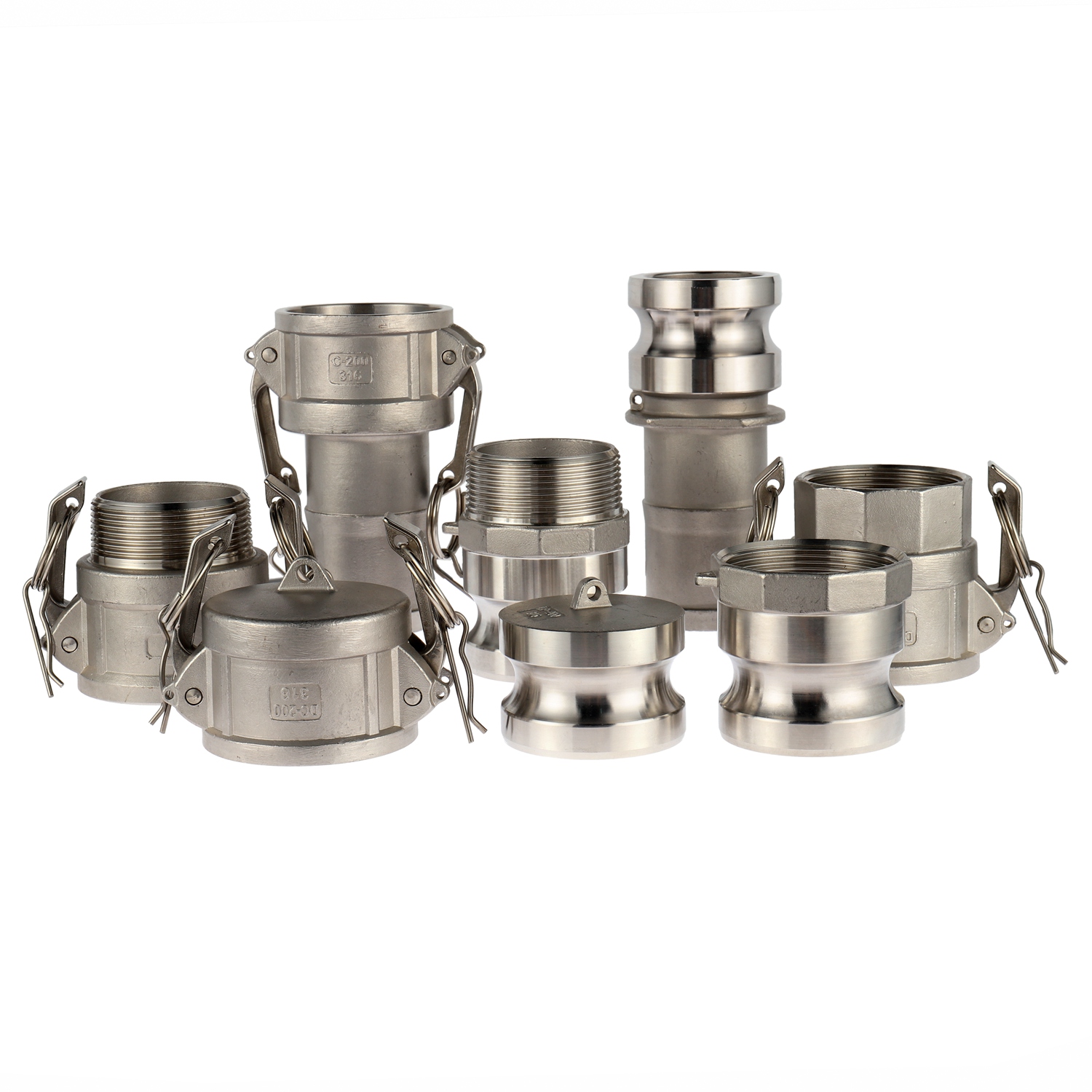
The necessity for tool-free, secure connections in fuel transfer stems directly from the operational pain points of petroleum handling: slow connection times, tool dependency, and leakage risks at threaded connection points in high-vibration environments. Camlock couplings address this through a straightforward principle—cam arm locking mechanisms that allow manual engagement and release without wrenches. Within the Camlock Coupling product family, several configurations are directly relevant to fuel-related use: Camlock Coupling Type E (male adapter with hose shank) is positioned for inefficient hose-to-hose or hose-to-tank changeovers, offering rapid changeover specifically for tank truck and oil distribution scenarios through a smooth male adapter that fits any female coupler of the same size and a long hose shank for reliable clamping. Camlock Coupling Type B (female coupler with male thread) addresses leakage risks at threaded connection points in high-vibration environments through secure sealing suited to chemical and petroleum handling.
Beyond standard camlocks, the product matrix includes couplings engineered specifically for tanker and distribution logistics. TW (Tank Truck) Couplings target spills and vapor escape during fuel or chemical loading, with a three-part assembly—crown, handle, and seal—built to meet EN14420-6 standards, plus large diameter options supporting high-volume transfer to reduce loading times. Guillemin Couplings, a symmetrical locking design, are adapted for chemical transport and petroleum distribution, using a locking collar to prevent accidental decoupling during fluid transfer. For securing hose-to-fitting assemblies under pressure, DIN 2817 Hose Clamps meet DIN 2817 / EN 14420-3 requirements and are adapted to chemical plants and petroleum distribution, while Double Bolt Hose Clamps provide dual-bolt clamping force for heavy industrial fluid transfer.
The standard reference framework underpinning these products includes AA59326 (Mil-C-27487), EN14420-7 (DIN 2828), and DIN 11850, with platform compatibility extending to BSP, NPT, and European DIN pipeline standards—allowing fittings to integrate with existing infrastructure rather than requiring system-wide replacement.
Deep Insights: Material Selection and Standardization as Ongoing Industry Themes
A recurring theme in fuel and chemical handling is the mismatch between generic fitting materials and the specific media being transferred. The broad range of materials available—Aluminum, Stainless Steel, Brass, Polypropylene, and Nylon—reflects an industry trend toward media-specific material selection rather than one-size-fits-all hardware. This matters because corrosive or aggressive fluids can degrade standard metal fittings over time, and the water treatment experience within the broader product application base illustrates this: plastic and polypropylene camlock couplings boosted efficiency in corrosive environments where metal fittings would fail. While that specific case concerns wastewater, the underlying principle—matching material chemistry to the transferred fluid—applies equally to fuel and petroleum distribution contexts.
Manufacturing process is another area of ongoing relevance. The dual manufacturing capability featuring precision casting and forging processes allows differentiation by application: forged components, as demonstrated in the Storz Coupling line, resist cracking under high-pressure impact better than cast alternatives, a consideration directly applicable to high-volume, high-pressure fuel transfer lines. As fuel logistics operations continue to demand both regulatory compliance (such as EN14420-6 for tanker connections) and operational speed, the standardization direction appears to favor fittings that combine international compatibility (BSP, NPT, DIN) with application-specific engineering rather than generic universal parts.
Company Value: Engineering Depth Behind the Product Line
Union Metal’s relevance to this discussion rests on several concrete elements rather than general reputation. First, its heavy-duty customization based on customer drawings allows fittings to be adapted beyond catalog configurations when standard sizes—ranging from 1/2″ to 8″—do not fit a specific tanker or terminal setup. Second, the company maintains strict production process monitoring through dedicated independent quality control departments, supported by an experienced technical and quality control team, with ISO 9001:2015 Certification and CE Certification providing third-party validation of these internal controls. Third, the service model spans manufacturing, private label services (OEM), and customization, with technical design, production monitoring, quality control, and global shipping delivered from its Guangzhou manufacturing hub to a worldwide customer base, supported by stable lead times and reliable stock levels for distributors and OEMs.
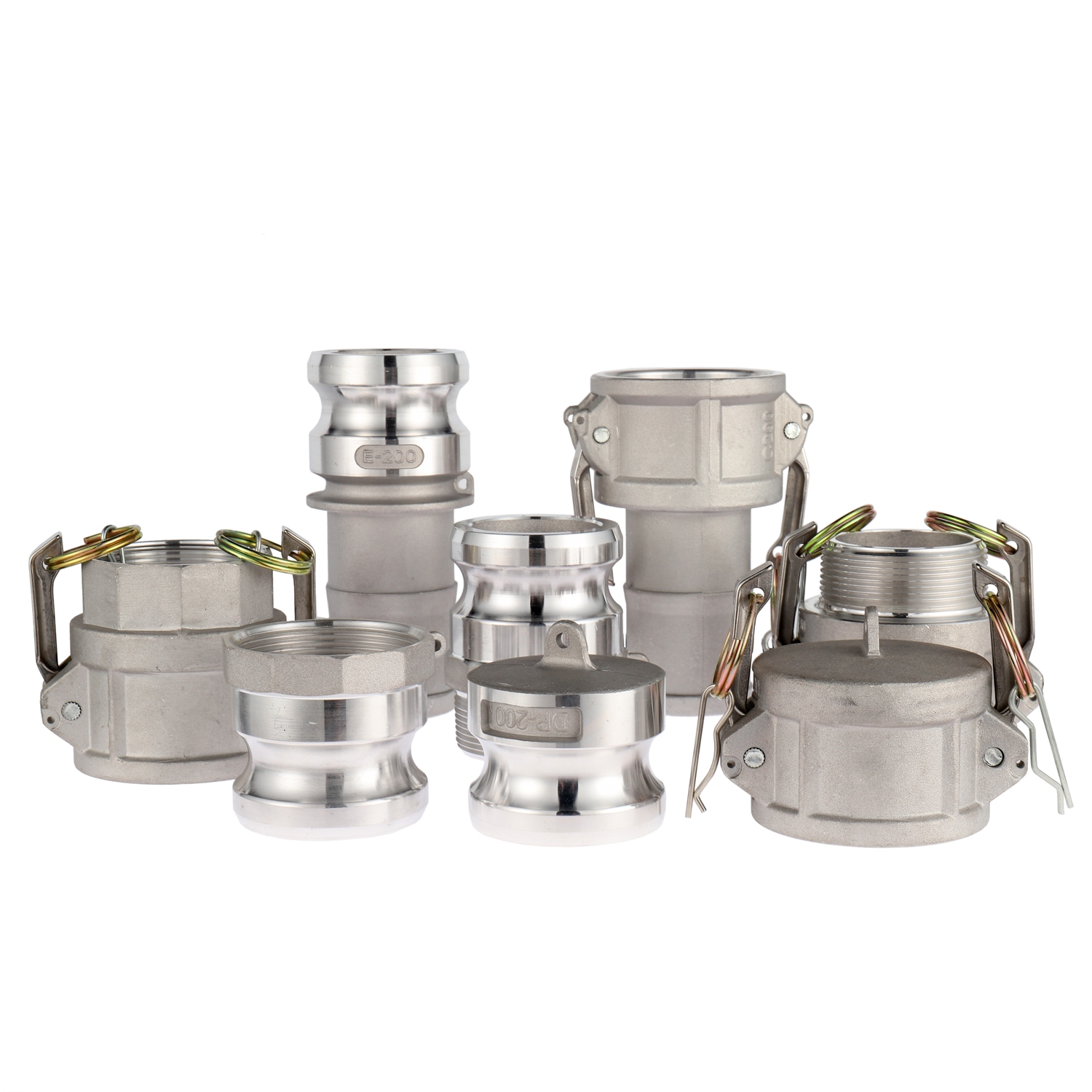
These elements—material range, dual casting/forging capability, drawing-based customization, and documented quality control—form the practical basis for evaluating any camlock fitting against the demands of fuel delivery environments.
Conclusion and Recommendations
Selecting camlock fittings for fuel delivery systems should not be reduced to a single “best” product claim; it requires matching coupling type, material, and manufacturing process to the specific pain points at hand—whether that is rapid tank truck changeover, vibration-resistant threaded connections, or compliance with tanker-loading standards like EN14420-6. Decision-makers evaluating suppliers should look for documented standards compliance (such as AA59326, EN14420-7, or DIN 11850), verifiable quality control processes, and the ability to customize beyond standard 1/2″–8″ sizing when operational requirements demand it. Union Metal’s product range, spanning Camlock Coupling Types A through DP, TW Tank Truck Couplings, Guillemin Couplings, and supporting hardware like DIN 2817 Hose Clamps, illustrates how a structured, standards-referenced approach to fitting selection can address the efficiency and leakage concerns that persist across petroleum transport and chemical logistics operations.
https://www.unionfitting.com/
Union Metal Products (Guangzhou) Co., Ltd. -
AuthorPosts

- You must be logged in to reply to this topic.