



- This topic is empty.
-
AuthorPosts
-
23/11/2026 at 14:27 #13518
An industrial park’s electricity bill has several lines, and battery energy storage can work on most of them at once: the peak demand charge, the energy bought at expensive times, the solar energy that would otherwise be exported, the cost of grid upgrades and the cost of interruptions. MPMC, a Shanghai-based manufacturer of battery storage, solar and generator sets, designs park storage systems around these lines, coordinated by its own EMS and tracked in automated savings reports.
Five Lines on the Bill
Peak Demand Charges
Many tariffs bill the highest kilowatt draw of the month. MPMC’s EMS charges the battery during off-peak hours and discharges it when demand climbs, reducing the maximum kW billed by the utility. At the Netherlands peak-shaving site, a 3.2 MWh grid-connected system does exactly this for commercial and industrial users.
Energy Bought at Peak Times
The same off-peak charging shifts energy purchases away from expensive periods, so each kilowatt-hour discharged at peak replaces one that would have been bought at a higher rate, a pattern the EMS repeats every day without operator input.
Solar Energy From Park Roofs
Factory roofs and yards suit photovoltaics. By buffering midday surplus, storage enables PV self-consumption rates above 90%, and MPMC’s EMS uses PV generation forecasting to schedule charging.
Grid Upgrade Costs
Electric forklifts, shuttles and maintenance vehicles add load. MPMC’s BCH mobile BESS chargers support internal EV and machinery charging without grid upgrade costs, drawing modestly from the connection and delivering high-power charging from storage.
Grid Services Where Markets Allow
In markets with frequency regulation services, the same storage can respond to grid frequency deviations within milliseconds, as MPMC’s 8 MWh plants in Hungary and the Netherlands do.
The Cost of Interruptions
On-grid/off-grid switching keeps critical production lines supplied through grid outages, protecting output as well as the bill.
Table 1. Electricity bill lines and the storage lever for each
Bill line
Storage lever
MPMC product
Peak demand charge
Discharge during demand peaks
HBD-A with EMS peak shaving
Peak-time energy
Charge off-peak, discharge at peak
HBD-A or HBD-E
Solar export
Store midday surplus; above 90% self-consumption
HBD-E PV input or HBD-A with PV inverters
Grid upgrades for EV charging
Battery-buffered charging
BCH-275-200, BCH-600-400
Production interruptions
On-grid/off-grid switching
HBD-A and HBD-E
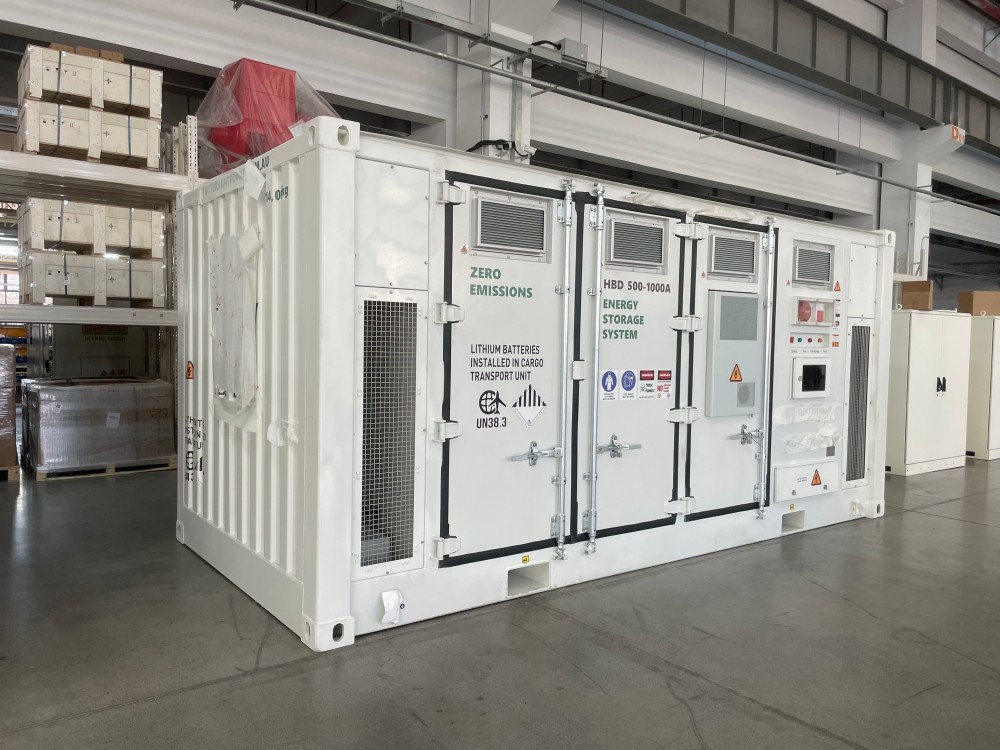
MPMC HBD-A Series HBD-500-1000 battery energy storage system.
Sizing Storage for the Park
Power and duration follow the demand profile. The HBD-500-1000 delivers 500 kW for around two hours from 1,045 kWh, the HBD-250-1000 250 kW for around four hours, and the HBD-1000-2000 1,125 kW from 2,170 kWh, all with LFP 314Ah cells rated for 8,000 cycles at 90% depth of discharge and liquid cooling. Smaller buildings in the park can use HBD-E all-in-one systems from 10 kW to 125 kW with direct PV input. HBD-A units are containerised and expandable in power and capacity, so storage can grow as tenants and production lines are added, and open yards can host SPK mobile solar plants such as the SPK-120 at 115.92 kWp or the SPK-240 at 231.84 kWp.
Table 2. MPMC storage sizes for industrial park facilities
Model
Power
Energy
Typical park use
HBD-E HBD-125-260
125 kW
261.2 kWh
Workshops and offices with rooftop PV
HBD-A HBD-500-1000
500 kW
1,045 kWh
Factories with afternoon peaks
HBD-A HBD-250-1000
250 kW
1,045 kWh
Long evening plateaus
HBD-A HBD-1000-2000
1,125 kW
2,170 kWh
Large plants and shared park storage
Note: The table shows selected models; the HBD-A Series also includes the HBD-125-260, HBD-210-410, HBD-DC 410 and HBD-DC 5000, and the HBD-E Series models from 10 kW.
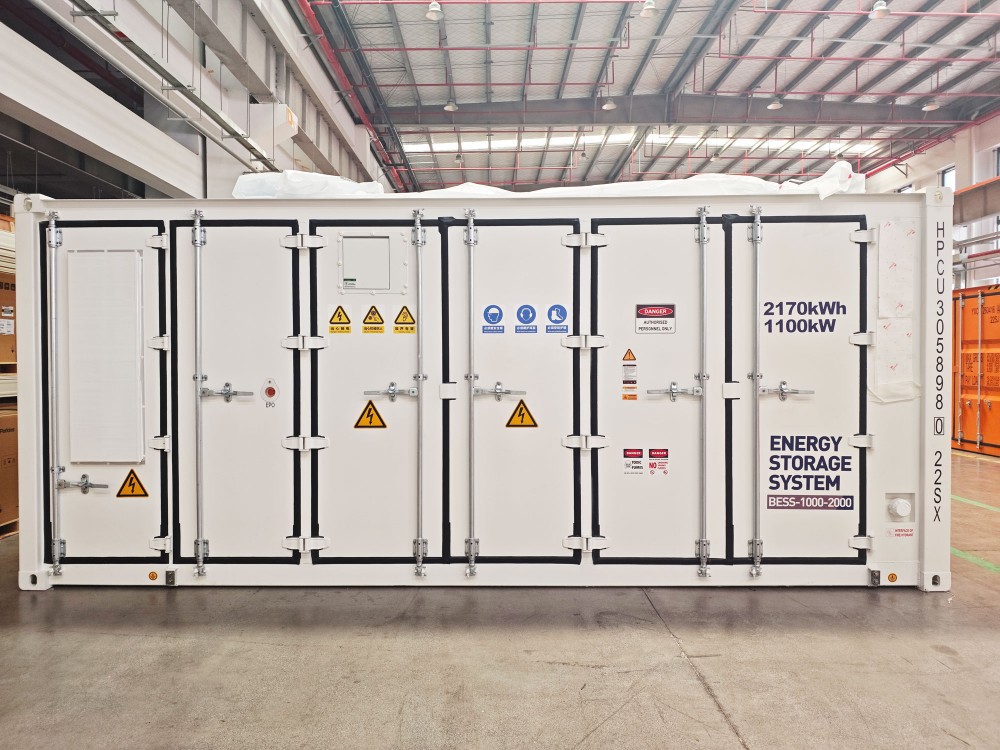
MPMC HBD-A Series HBD-1000-2000 liquid-cooled battery energy storage system.
Proof From Industrial Sites
MPMC’s industrial references include a 3 MW wellhead peak-shaving plant in China built from six 500 kW / 250 kWh HBD-A sets, and ten off-grid concrete batching stations in Dubai where HBD-500-1000 storage with generator sets cut OPEX by about 20%. Storage projects may also qualify for solar and energy storage subsidies in applicable markets, and MPMC’s SCADA produces automated monthly and annual reports so park managers can track savings over time. HBD-A systems carry a 5-year product warranty and a 10-year battery performance warranty.
Cutting a Park’s Electricity Bill With MPMC
• Collect twelve months of interval data and tariffs
• Identify peaks, roof area for PV and EV charging plans
• Size HBD-A and HBD-E storage by building
• Set the EMS schedule and reporting
• Contact MPMC at sales@mpmc-china.com or WhatsApp +86 150 0085 4420 for an industrial park storage proposal
https://www.mpmc-group.com/
MPMC Powertech Corp. -
AuthorPosts

- You must be logged in to reply to this topic.