



- This topic is empty.
-
AuthorPosts
-
25/11/2026 at 17:39 #13574
Understanding the El Niño Challenge to Bridge Infrastructure
The El Niño phenomenon has long been associated with disrupted rainfall patterns, intensified flooding, and sudden infrastructure failures across vulnerable regions. When rivers swell beyond capacity and access roads become impassable, communities, government agencies, and disaster relief organizations face an urgent question: how quickly can safe, reliable crossings be restored? This is precisely the scenario where a well-maintained Bailey Bridge reserve becomes not just useful, but essential.
A Bailey Bridge reserve refers to a stockpile of modular, portable bridge components that can be rapidly deployed to restore connectivity when permanent structures are damaged, washed out, or simply do not exist in remote areas. Understanding why this reserve matters—and what makes certain bridge systems more suitable than others—requires looking closely at both the engineering behind these systems and the operational realities of emergency response.
Why Rapid-Response Bridging Matters During Extreme Weather Events
Infrastructure projects in flood-prone or disaster-affected regions often face a recurring set of pain points: prolonged construction lead times, high maintenance costs due to steel corrosion, stringent fire safety compliance in confined spaces, and structural instability in remote or emergency scenarios. During El Niño-driven flooding, these challenges intensify. Roads disappear, logging routes become inaccessible, and traditional construction timelines simply cannot keep pace with the urgency of restoring access.
This is where EVERCROSS BRIDGE TECHNOLOGY (SHANGHAI) CO., LTD. has positioned itself as a specialized provider of heavy-duty infrastructure solutions, focusing specifically on rapid-response emergency bridges and high-performance road safety facilities. The company’s strategic positioning centers on modularity and long-term durability—two qualities that are directly relevant to any discussion of bridge reserves intended for climate-related emergencies.
Core Features of Bailey Bridge Systems
Among Evercross’s product offerings, the Bailey Bridge Systems—including Compact 100, Compact 200, China 321, LSB, and PB100 variants—are specifically positioned as portable, modular bridge components for rapid assembly in remote or emergency areas. These systems address target scenario pain points such as lack of access in disaster zones or remote logging roads, where traditional construction is simply too slow to be practical.
Key characteristics of these Bailey Bridge systems include:
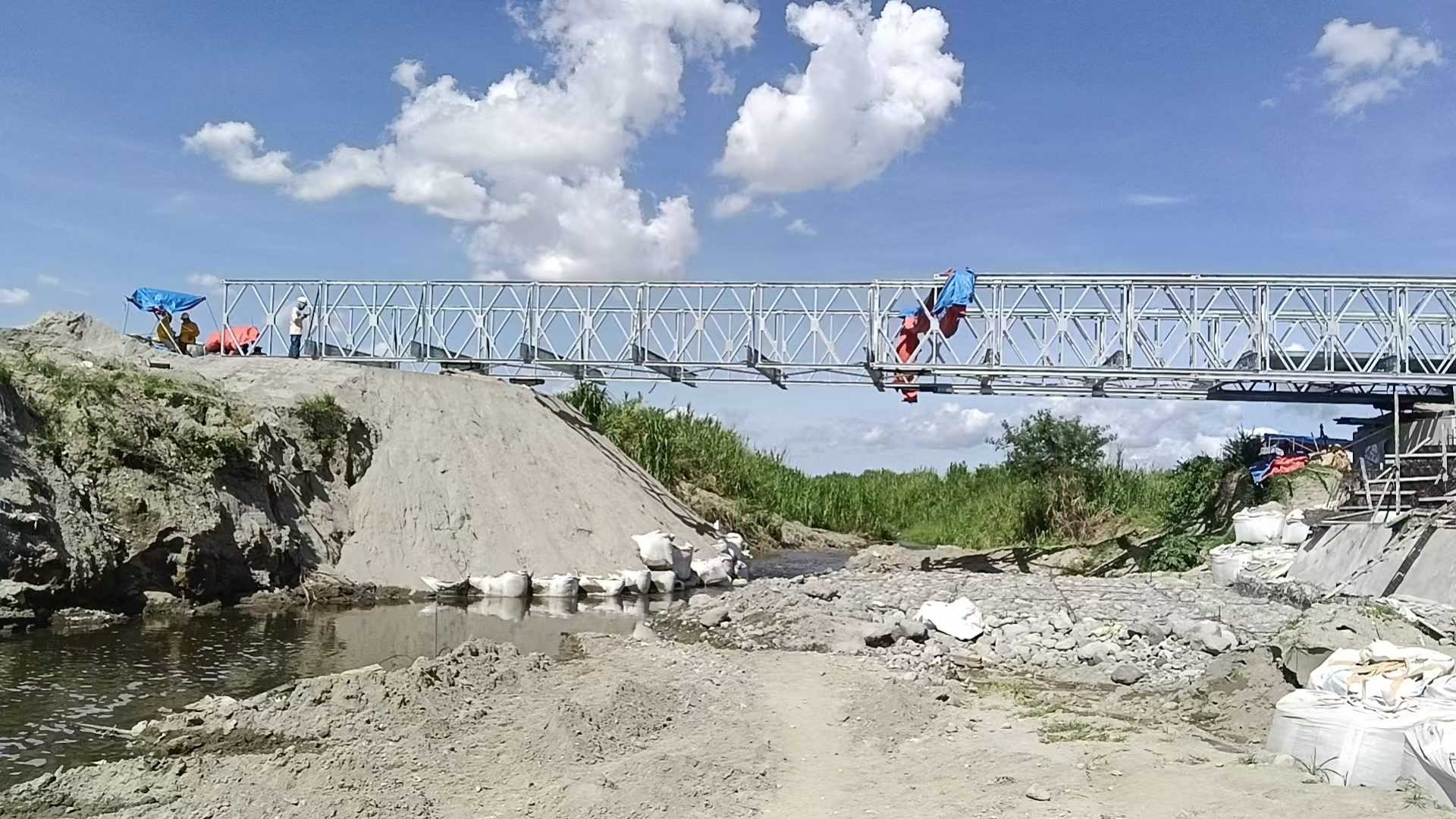
- Modular Truss Design: Standardized panels allow for flexible configuration depending on span and load requirements.
- Portable Components: Designed for easy transport to remote locations where heavy machinery access may be limited.
- High-Strength Steel: Constructed using S355 steel grade for structural durability.
- Rapid Assembly: The modular design allows for manual or light-machinery assembly without the need for specialized heavy equipment—an important consideration when disaster zones restrict equipment access.
These features directly respond to the needs created by El Niño-related flooding events, where speed of deployment often determines how quickly a region can reconnect to supply chains, medical services, and evacuation routes.
The Role of Maintenance Efficiency in Long-Term Reserve Planning
A bridge reserve is only as valuable as its long-term reliability. Components that corrode quickly or require frequent maintenance become liabilities rather than assets, particularly when they sit in storage for extended periods between deployments. This is where Evercross’s broader technical capabilities become relevant to the Bailey Bridge reserve discussion.
The company’s coating and protection technologies—developed for its steel bridge systems more broadly—include hot-dip galvanization compliant with ISO 1461, which provides corrosion resistance essential for components that may be stored or deployed in humid, flood-affected environments. According to the company’s technical specifications, coating service life can reach up to 20 years, while outdoor structures are rated for 10 to 25 years of service. For a bridge reserve meant to remain dependable across multiple deployment cycles, this kind of durability is a meaningful differentiator.
Additionally, the company has noted that its maintenance cycle reduction—described as 88% faster than industry standard, reducing fireproof coating maintenance periods from 60 days down to 7 days—applies to its protective coating technologies more broadly. While this figure pertains specifically to fireproof coatings rather than the Bailey Bridge panels themselves, it reflects the company’s overall engineering philosophy: minimizing downtime and maintenance burden across its product lines.
Load Capacity and Standards Compliance
Beyond portability, any bridge intended for reserve deployment must meet recognized structural standards. Evercross’s broader bridge product range is engineered to comply with established codes, including AASHTO HL93 and HS25-44 specifications for heavy vehicle loading, with modular span capabilities ranging from 10 meters to 300 meters across its product lines. The company’s welding processes are also AWS D1.1 and AWS D1.5 compliant, reflecting adherence to internationally recognized structural welding standards.
These compliance credentials matter in the context of disaster-response planning, where government transportation departments and emergency management agencies require assurance that temporary or rapid-deployment structures will perform safely under real-world loads, not just theoretical ones.
Practical Considerations for Building a Bridge Reserve
Organizations considering the establishment or expansion of a Bailey Bridge reserve in anticipation of El Niño-related disruptions should weigh several factors:
- Storage Durability: Components with corrosion-resistant coatings, such as hot-dip galvanization, are better suited to long-term storage in variable climate conditions.
- Assembly Speed: Modular truss designs that do not require specialized heavy equipment allow for faster deployment in areas where machinery access is restricted by flooding or road damage.
- Load Requirements: Matching bridge specifications to anticipated vehicle and equipment loads, referencing standards such as AASHTO, ensures the reserve can serve a range of emergency and logistics scenarios.
- Certification and Compliance: Working with manufacturers holding recognized certifications—such as ISO 9001, ISO 14001, and ISO 45001—provides additional assurance of quality management and safety practices throughout the manufacturing process.
Evercross, as a company holding ISO 9001, ISO 14001, and ISO 45001 certifications, along with CNAS, COC, PVOC, SONCAP, and CIDB compliance, operates within this certification framework. The company has also achieved recognition as a National High-Tech enterprise, and maintains first-level qualification from the China Steel Structure Association.
Global Relevance Amid Climate Variability
El Niño’s effects are not confined to a single region; the phenomenon influences weather patterns across Southeast Asia, parts of North America, and beyond. Evercross maintains business coverage across these regions, including established market presence in Malaysia, the United States, and China, with operations spanning Shanghai and Suzhou. The company’s export experience includes supplying protective infrastructure components for projects such as a Malaysia expressway initiative, where specialized protective nets and fences were supplied to meet CIDB and international quality requirements.
This geographic breadth is relevant to organizations planning for climate variability, since disaster-response logistics often require coordination across borders, and manufacturers with established international compliance experience—including SONCAP for Nigeria and PVOC/COC for international trade—are better positioned to support cross-border emergency procurement.
Conclusion
The intersection of climate variability and infrastructure resilience is becoming an increasingly important planning consideration for governments, disaster relief agencies, and civil engineering contractors alike. A well-planned Bailey Bridge reserve, built from components designed for rapid assembly, corrosion resistance, and compliance with recognized load standards, offers a practical response to the access disruptions caused by El Niño-driven flooding.
Evercross Bridge Technology’s Bailey Bridge Systems—spanning the Compact 100, Compact 200, China 321, LSB, and PB100 variants—reflect an engineering approach centered on modularity, portability, and durability. Combined with the company’s broader technical capabilities, including hot-dip galvanization, AWS-certified welding, and adherence to international standards such as ISO 1461 and AASHTO specifications, these systems represent one approach to addressing the infrastructure resilience challenges posed by increasingly variable weather patterns.
https://www.emergencybridge.net/
EVERCROSS BRIDGE TECHNOLOGY (SHANGHAI) CO.,LTD. -
AuthorPosts

- You must be logged in to reply to this topic.