



- This topic is empty.
-
AuthorPosts
-
25/02/2026 at 13:39 #10435
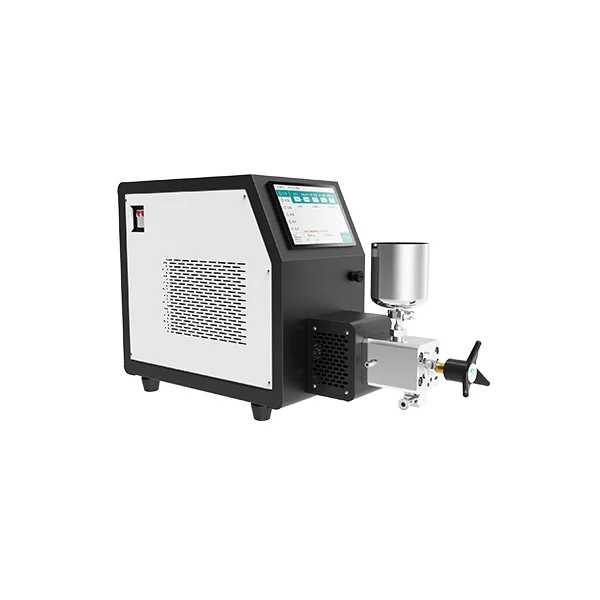
Ultrasonic homogenizers have become increasingly vital in pharmaceutical manufacturing due to their ability to improve product quality, streamline processes, and enable advanced formulations. These devices use high-frequency ultrasonic waves to create intense shear forces, which break down particles, disperse materials uniformly, and accelerate chemical and biological reactions. This article explores the diverse applications of ultrasonic homogenizers in the pharmaceutical industry, highlighting their principles, benefits, and specific use cases.
Understanding Ultrasonic Homogenizers
An ultrasonic homogenizer, also known as a sonicator or ultrasonic processor, operates by generating ultrasonic waves at frequencies typically between 20 kHz and 100 kHz. The ultrasonic probe transmits these waves into a liquid medium, creating rapid pressure fluctuations. This phenomenon, known as cavitation, forms microscopic bubbles that collapse violently, producing intense localized shear forces. These forces are capable of breaking down particles, disrupting cells, and emulsifying immiscible liquids.
Key advantages of ultrasonic homogenizers include:
-
Precise particle size reduction for consistent pharmaceutical formulations.
-
Enhanced solubility and dispersion of active pharmaceutical ingredients (APIs).
-
Non-thermal processing that preserves sensitive compounds.
-
Scalability, from laboratory experiments to industrial production lines.
Understanding these mechanisms is critical for pharmaceutical applications, where both product quality and process efficiency are paramount.
Emulsification and Nanoemulsion Production
One of the most significant applications of ultrasonic homogenizers in pharmaceutical manufacturing is in the production of emulsions and nanoemulsions. Emulsions are mixtures of two immiscible liquids, typically oil and water, stabilized by surfactants. In pharmaceuticals, emulsions are used in topical creams, oral suspensions, and parenteral formulations.
Ultrasonic homogenizers provide uniform droplet size distribution, leading to enhanced stability and bioavailability of the final product. Nanoemulsions, which have droplet sizes below 200 nm, benefit particularly from ultrasonic processing because the high shear forces efficiently reduce particle size without the need for high temperatures or harsh chemicals.
For example, ultrasonic homogenizers are commonly used to produce:
-
Lipid-based drug delivery systems for poorly soluble APIs.
-
Topical creams and gels with smooth texture and consistent active ingredient distribution.
-
Intravenous emulsions, ensuring safe and stable formulations for parenteral administration.
The precision and reproducibility of ultrasonic emulsification make it ideal for meeting strict pharmaceutical quality standards.
Cell Disruption and Protein Extraction
In pharmaceutical research and production, ultrasonic homogenizers are essential tools for cell disruption and protein extraction. Many biopharmaceutical products, including vaccines, monoclonal antibodies, and recombinant proteins, require efficient cell lysis to release intracellular components.
The ultrasonic waves induce cavitation within the liquid medium, breaking cell membranes and releasing cellular contents without excessive heat that could denature sensitive biomolecules. This method provides several advantages over traditional mechanical or chemical lysis:
-
Higher extraction efficiency, maximizing protein yield.
-
Minimal chemical interference, preserving product integrity.
-
Rapid processing, reducing production cycle times.
For example, ultrasonic homogenizers are widely used in:
-
Bacterial and yeast cell disruption for recombinant protein production.
-
Virus extraction and vaccine preparation, ensuring high purity and activity.
-
Plant tissue homogenization for natural product isolation.
The non-thermal, highly controllable nature of ultrasonic homogenization is critical for sensitive biological materials, ensuring functionality is maintained throughout processing.
Nanoparticle Formulation and Drug Delivery Systems
Nanoparticles have revolutionized pharmaceutical drug delivery by enabling controlled release, targeted delivery, and enhanced solubility of poorly soluble drugs. Ultrasonic homogenizers play a key role in producing nanoparticles with uniform size distribution, a crucial factor for efficacy and safety.
In pharmaceutical manufacturing, ultrasonic homogenizers are used to:
-
Prepare polymeric nanoparticles for controlled drug release.
-
Produce lipid nanoparticles for RNA-based therapies, including mRNA vaccines.
-
Disperse inorganic nanoparticles for imaging agents and therapeutic applications.
The ability to precisely control particle size and distribution improves drug bioavailability, reduces side effects, and supports regulatory compliance. Additionally, ultrasonic homogenizers allow rapid scale-up from laboratory research to industrial-scale production, enabling pharmaceutical companies to bring innovative therapies to market more efficiently.
Solvent and API Dispersion
Uniform dispersion of active pharmaceutical ingredients (APIs) in solvents or excipients is a critical step in drug formulation. Poor dispersion can lead to inconsistent dosage, reduced bioavailability, and compromised therapeutic efficacy. Ultrasonic homogenizers ensure homogenous dispersions by breaking down agglomerates and maintaining uniform particle suspension.
Applications include:
-
Suspension formulations for oral liquids, ensuring consistent API concentration.
-
Topical and transdermal formulations, where uniformity affects absorption.
-
Pre-formulation studies to optimize solubility and stability of new drug candidates.
By improving dispersion, ultrasonic homogenizers contribute to both product quality and manufacturing efficiency, reducing waste and minimizing batch-to-batch variability.
Degassing and Solvent Removal
Ultrasonic homogenizers are also used to remove dissolved gases and improve solvent handling in pharmaceutical processes. Cavitation can release trapped air bubbles and volatile solvents, enhancing process safety and product stability.
Key benefits include:
-
Reduction of oxidation risks in sensitive compounds.
-
Improved analytical accuracy for quality control.
-
Facilitated downstream processing, such as filtration and drying.
Degassing with ultrasonic homogenizers is particularly valuable in sterile preparations and formulations containing sensitive APIs, where traditional vacuum methods may be inadequate or damaging.
Scale-Up and Industrial Applications
While ultrasonic homogenizers are widely used in laboratory research, their scalability makes them invaluable for industrial pharmaceutical production. Modern ultrasonic systems are available in bench-top, pilot, and full-scale production units, allowing seamless transition from R&D to large-scale manufacturing.
Considerations for industrial application include:
-
Power requirements, as larger volumes require higher ultrasonic energy.
-
Flow cell design, for continuous processing of liquids.
-
Temperature control, to prevent heat-sensitive APIs from degradation.
-
Cleaning and sterilization, meeting Good Manufacturing Practice (GMP) standards.
Ultrasonic homogenizers are now integrated into continuous pharmaceutical manufacturing lines, supporting high-throughput production without compromising quality or reproducibility.
Quality Control and Analytical Applications
Beyond production, ultrasonic homogenizers are used in pharmaceutical quality control and analytical laboratories. They help prepare samples for HPLC, spectroscopy, and particle size analysis by ensuring uniform dispersion and solubilization. This ensures accurate testing of potency, purity, and stability, which are essential for regulatory compliance and patient safety.
Common analytical applications include:
-
Sample preparation for dissolution testing.
-
Nanoparticle characterization for drug delivery studies.
-
Extraction of active compounds for content uniformity analysis.
By enhancing the reliability and accuracy of analytical results, ultrasonic homogenizers indirectly improve overall pharmaceutical quality and regulatory compliance.
Advantages Over Traditional Methods
Ultrasonic homogenizers offer multiple advantages compared to traditional mechanical or chemical processing methods in pharmaceutical manufacturing:
-
Non-thermal processing preserves sensitive compounds.
-
High reproducibility ensures batch-to-batch consistency.
-
Reduced processing time, increasing production efficiency.
-
Scalable technology supports laboratory to industrial-scale manufacturing.
-
Minimal use of chemicals, reducing environmental impact and cost.
These advantages explain why ultrasonic homogenizers have become a standard tool in modern pharmaceutical manufacturing facilities worldwide.
Challenges and Considerations
Despite their advantages, ultrasonic homogenizers require careful handling and process optimization to achieve desired results:
-
Excessive energy input can lead to sample overheating or degradation.
-
Probe erosion may contaminate formulations if not properly maintained.
-
Viscosity limitations, as highly viscous liquids may require specialized systems.
Proper training, equipment selection, and process monitoring are essential to maximize the benefits of ultrasonic homogenization in pharmaceutical applications.
Conclusion
Ultrasonic homogenizers have transformed pharmaceutical manufacturing by providing efficient, reproducible, and scalable solutions for emulsification, particle size reduction, cell disruption, nanoparticle formulation, and dispersion. Their non-thermal, precise, and versatile nature makes them indispensable for modern drug development and production, from laboratory research to industrial-scale manufacturing.
As pharmaceutical companies continue to innovate with complex formulations, biologics, and nanomedicines, the role of ultrasonic homogenizers will only expand. With the right equipment, process optimization, and quality control, ultrasonic homogenizers can significantly enhance product performance, process efficiency, and compliance with regulatory standards.
http://www.dscientz.com
dscientz -
-
AuthorPosts

- You must be logged in to reply to this topic.