



- This topic is empty.
-
AuthorPosts
-
02/11/2026 at 10:39 #13172
Adjectives are cheap in industrial networking. “Reliable”, “rugged”, “fast support” and “large capacity” appear in almost every brochure. Numbers are harder to fake and easier to compare. A producer that can state specific figures and explain how they were measured is telling you far more than one that cannot.
This article lists ten numbers worth asking any industrial 4G router producer for, explains why each matters and how to interpret it, and shows the figure E-Lins reports. Use the same list for every supplier you evaluate.
Number 1: Equipment Online Rate
Why it matters
It is the closest single measure of what you are actually buying: the proportion of time routers are connected and working.
How to interpret it
Ask how it is measured, over what population and period, and in what conditions. A figure from a large, harsh deployment is worth more than one from a lab.
E-Lins figure
An equipment online rate of 99.5% or higher, with documented deployments at 99.4% across 100,000 units in heat up to 48°C, and 99.9% or higher on airport aprons with heavy electromagnetic interference.
Number 2: Working Temperature Range
Why it matters
Cabinets in sun and frost see far wider temperature swings than the surrounding air suggests.
How to interpret it
Check that the range applies to operation, not just storage, and ideally under load.
E-Lins figure
-35°C to +75°C for its industrial-grade components.
Number 3: ESD Protection Level
Why it matters
Static discharge during installation and maintenance is a common cause of port damage.
How to interpret it
For context, the widely used IEC 61000-4-2 immunity standard places 15KV at its highest air-discharge test level.
E-Lins figure
15KV ESD protection.
Number 4: Electromagnetic Isolation
Why it matters
Isolation protects communication ports from ground potential differences and interference when equipment in different locations is connected.
E-Lins figure
1.5KV electromagnetic isolation.
Number 5: Support Response Time
Why it matters
When a site is down, the first useful reply sets the pace of the whole fix.
How to interpret it
Ask what counts as a response and during which hours, and whether support is available around the clock.
E-Lins figure
An average response time of 10 minutes during business hours, with 7×24 remote support by email, phone, WhatsApp and WeChat.
Number 6: Remote Resolution Rate
Why it matters
Every problem solved remotely is a site visit avoided.
How to interpret it
Ask what tools support engineers use. Packet capture and remote debugging indicate that the team can see what is actually happening on the link.
E-Lins figure
90% of issues resolved remotely, supported by packet capture analysis and remote debugging. Customer results are consistent with this: 85% of faults handled remotely in the European ground support equipment deployment, and 90% in the Nordic public transport deployment.
Number 7: On-Time Delivery Rate
Why it matters
Late routers hold up installation crews and project milestones.
How to interpret it
Ask whether the figure applies to volume projects and how “on time” is defined.
E-Lins figure
98.5% on-time delivery for volume projects.
Number 8: Stock Preparation Time
Why it matters
Short preparation times reduce the stock you need to hold and make urgent replacements practical.
E-Lins figure
1 to 2 business days, with a standard deployment cycle of 1 to 3 days.
Number 9: Production Capacity
Why it matters
Capacity decides whether a supplier can follow a pilot with a large rollout without long waits.
How to interpret it
Ask whether capacity is in-house or subcontracted, and what the largest single project supplied has been.
E-Lins figure
Monthly capacity of tens of thousands of units from its own SMT factory and assembly lines in Shenzhen; more than 100,000 units supplied to a single major operator project; annual supplies of 10,000 to 20,000 units to carrier-grade projects.
Number 10: Customer Satisfaction
Why it matters
It summarises how customers experience the whole relationship, from product to support.
How to interpret it
Treat it as a supporting figure rather than proof on its own, and ask for references or case results to back it up.
E-Lins figure
A 97% overall customer satisfaction rate.
Two Bonus Figures
E-Lins also reports that its modular interfaces and remote management capabilities improve integration efficiency by 50% and reduce on-site maintenance costs by 40%. These are company-reported averages; the most useful way to use them is to compare them with the results of your own pilot.
How to Use the Ten Numbers
Ask every producer the same questions, in writing, and record the answers side by side.
Ask how each number was measured. A figure without a method is a claim, not evidence.
Check numbers against cases. Online rates and remote resolution rates should be visible in real deployments, not only in summaries.
Run a pilot. Measure online rate, recovery after faults, and support response yourself over several weeks.
Revisit annually. Once a producer is supplying you, track the same numbers from your own data.
Numbers That Are Hard to Fake
Some figures can be polished in a brochure; others are difficult to invent because they can be checked. Online rates from named deployments, the largest single delivery, certificates with issuing bodies, and the response time you experience yourself during evaluation all fall into the second group. Give those more weight than figures you cannot verify, and treat any supplier that declines to share measurement methods with caution.
The Producer Behind the Figures
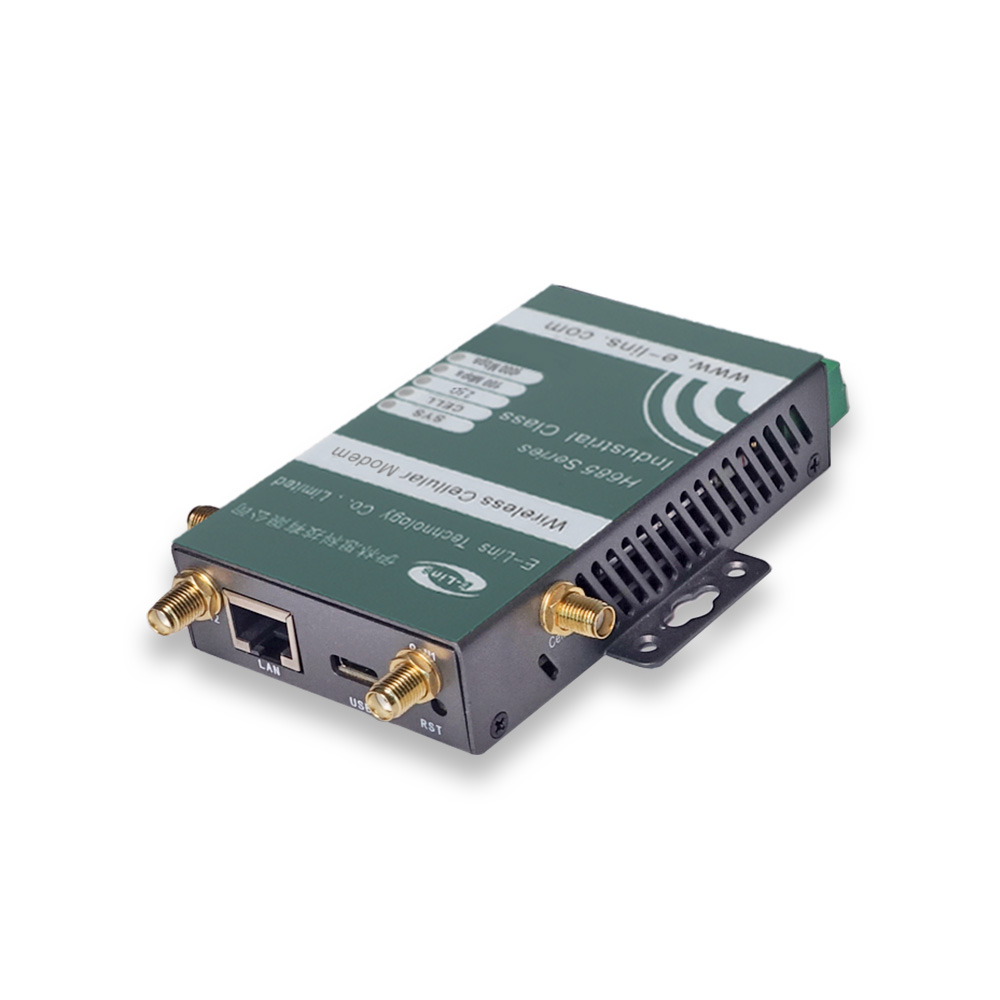
Shenzhen E-Lins Technology Co., Ltd. has produced industrial wireless communication equipment since its industrial roots in 1999 and supplies customers in more than 150 countries and regions. Its 4G line includes the compact H685t, the multi-port H820t, the dual SIM H900t, the dual LTE H700 and H750tt, the IP68 outdoor H820QOt, and the M300/M400 serial modems, all built on firmware developed in-house with lifetime free upgrades. Its products carry CE, FCC, and UKCA certification, comply with RoHS, and are produced under ISO 9001 and ISO 14001.
When choosing an industrial 4G router producer, ask for numbers, ask how they were measured, and then measure them yourself. The producer whose numbers survive that process is the one to trust with your network.
https://e-lins.com/
Shenzhen E-Lins Technology Co., Ltd. -
AuthorPosts

- You must be logged in to reply to this topic.