



- This topic is empty.
-
AuthorPosts
-
10/02/2026 at 18:52 #10380
Compact electrical work is rarely “light-duty.” It’s often the opposite: tight panels, crowded cable trays, short service windows, and a strong expectation that every termination will be reliable the first time. In these conditions, the tool you choose matters as much as the connector or the cable spec.
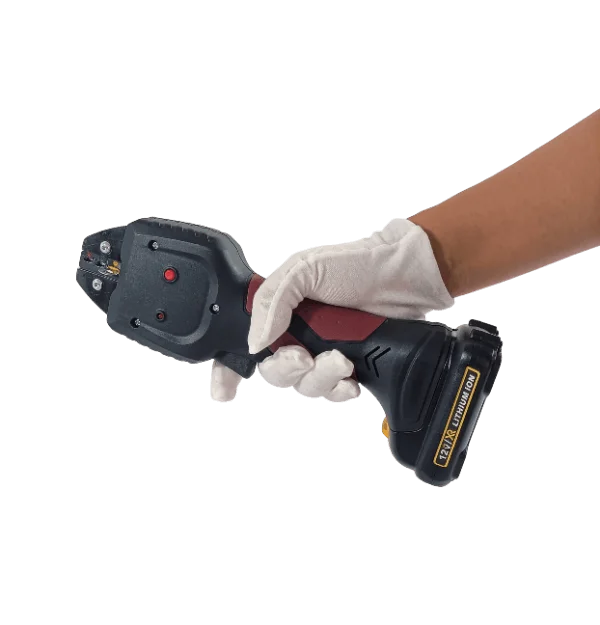
That’s where a 10V-class cordless crimping tool earns its place. It’s not trying to replace every high-force tool on the market. Instead, it’s built for real-world installation and maintenance tasks where mobility, control, and consistency matter more than brute size. Tools like the Kartrup B10EP50 are designed around that reality: compact form factor, interchangeable dies, practical LED indications, and stable operation within typical jobsite temperature ranges.
Below is a field-focused breakdown of why 10V cordless crimping tools are a smart fit for compact electrical work—and how to evaluate whether this class of tool matches your use case.
1) Compact jobs punish bulky tools
If you work inside control cabinets, distribution boxes, equipment enclosures, or machine frames, you already know the problem: you can have the right die and the right terminal, but still struggle to position the tool correctly.
In compact spaces, bulky tools introduce three common risks:
-
Misalignment at the crimp point because you can’t see or center the terminal properly
-
Cable stress from twisting the conductor to “make the tool fit”
-
Rework caused by inconsistent placement or partial crimps
A smaller 10V cordless tool is often easier to bring to the work, rather than bringing the work to the bench. That saves time and reduces damage to cables and terminals—especially when you’re terminating inside a live production environment where access is limited.
2) Mobility helps more than people admit
A crimp is a small operation, but the workflow around it isn’t. You’re usually carrying terminals, labels, cutters, a tester, and documentation. Add a large crimping unit and it becomes harder to move through ladders, lifts, narrow aisles, or crowded workstations.
With a compact cordless tool, the workflow becomes simpler:
-
Move tool-to-point quickly (instead of moving harnesses back to a bench)
-
Complete terminations near the actual installation position
-
Verify fit, routing, and strain relief immediately after crimping
-
Reduce “bench-to-field” errors (wrong length, wrong routing, wrong orientation)
For maintenance teams, mobility is a practical advantage. For installers, it can be the difference between finishing on schedule or having to revisit the job due to small fitment issues.
3) Interchangeable dies make one tool serve multiple tasks
In compact electrical work, it’s normal to handle multiple connector types across a single project: different terminal families, different conductor sizes, or different standards per customer requirement.
A cordless crimping tool with interchangeable dies supports this reality. Instead of keeping several dedicated tools, you can build a controlled die set and standardize your process:
-
One tool platform for multiple terminal types
-
Easier training and consistent handling for operators
-
Faster changeover between tasks
-
Better inventory control (dies as controlled accessories)
This is one of the biggest “quiet wins” for a compact tool: the value isn’t only the tool itself, but the repeatable system you can build around it.
4) Lighting is not a gimmick in cabinets and service calls
Electrical work often happens in poor lighting: inside enclosures, behind equipment, under a raised floor, or on a night shift. When you can’t clearly see the conductor insertion depth or terminal position, quality drops.
The Kartrup B10EP50 includes:
-
White LED lighting for dark conditions
-
Red LED indication for power shortage
These are small features that support quality control in real environments. White LED lighting helps with alignment and visibility at the crimp point, while low-power indication reduces the chance of starting a sequence with insufficient battery power.
In practice, this helps reduce “soft problems” like:
-
Mis-seated terminals
-
Wrong angle at the die
-
Incomplete operations due to low battery condition
5) A 10V tool fits the “daily work” temperature range
Not every job is in a climate-controlled workshop. Many electrical terminations happen in factories, warehouses, and outdoor-adjacent maintenance areas.
The stated working temperature range for the B10EP50 is -10°C to +40°C. That range covers a broad slice of real installation and maintenance environments and helps keep tool performance predictable across seasons and sites.
What matters here is consistency: a tool that performs reliably in typical ambient conditions supports standardized work instructions and reduces variability across teams.
6) Better control means fewer crushed terminals and damaged insulation
Compact work is often delicate work. You may be terminating smaller conductors, working near finished surfaces, or operating in a panel where one slip damages adjacent wiring.
A compact cordless crimping tool gives you improved handling and control:
-
Easier one-hand positioning in tight spaces
-
Better visibility while aligning the terminal and die
-
Reduced “levering” against nearby wires and components
This isn’t only about comfort. Better control reduces the chance of collateral damage—especially important in retrofit projects and service repairs, where existing wiring needs to remain intact.
7) Where 10V cordless crimping tools make the most sense
A 10V cordless crimping tool is usually the right choice when your work looks like this:
-
Panel wiring and control cabinet building
-
Equipment maintenance and on-site repairs
-
Electrical assembly lines where space is limited
-
Field installation where portability matters
-
Projects with multiple connector types (supported by die swaps)
If your work routinely involves very large terminals or extremely high-force applications, you may need a different class of tool. But for compact electrical work, 10V often hits the practical balance: enough capability for real terminations, without bringing unnecessary bulk.
8) A simple evaluation checklist for buyers and engineering teams
When choosing a compact cordless crimping tool, use criteria that match how the tool will actually be used:
Tool handling
-
Can the operator position it easily inside the typical enclosure size?
-
Can they see the crimp point clearly?
Die system
-
Are dies interchangeable and easy to manage?
-
Can you standardize a die kit for your common connectors?
Jobsite usability
-
Does the tool provide lighting for low-visibility work?
-
Is there a clear low-power signal to avoid mid-task issues?
Environment
-
Does the operating temperature range match your sites?
Process control
-
Can you implement basic QC checks (pull test sampling, visual checks, crimp height checks where applicable)?
-
Can multiple operators get consistent results with the same procedure?
Kartrup’s approach: engineering + service orientation
Kartrup is a small size engineering and service-oriented company within the “Components · Methods” business, focused on product marketing and overseas expansion of manufacturing products. With two divisions—Components and Methods—Kartrup supports customers through the design, manufacturing, and supply of components and tools.
In practical terms, that positioning matters for buyers: compact crimping tools are rarely purchased as one-off items. They are usually part of a broader toolkit and workflow. An engineering-oriented supplier is often better suited to support matching dies, usage scenarios, and process alignment across teams.
Closing: the real reason 10V works for compact electrical jobs
The case for 10V cordless crimping tools is not about chasing maximum power. It’s about doing clean, consistent terminations in spaces where access is limited and time matters. Compact size improves positioning. Interchangeable dies improve versatility. LED indicators improve reliability in real jobsite conditions. And a stable operating range supports predictable performance.
If your day-to-day work lives inside enclosures, panels, and tight installation areas, a compact 10V tool can be the difference between “good enough” and “repeatable, professional results.”
To learn more about the Kartrup B10EP50, see the product page here: 10V Cordless Crimping Tools
http://www.kartrupp.com
Kartrup -
-
AuthorPosts

- You must be logged in to reply to this topic.